
 By joshua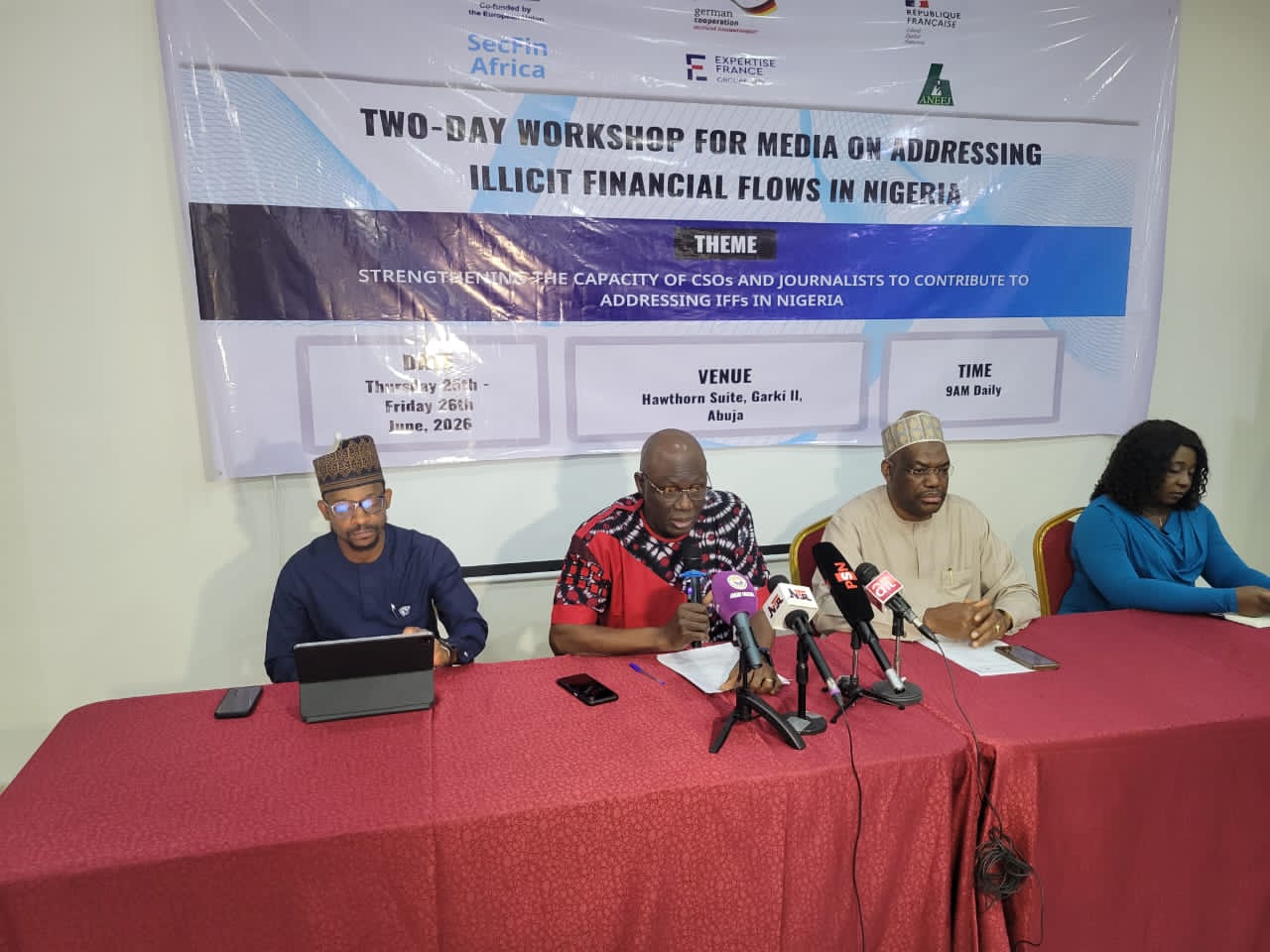
ANEEJ Trains 30 Journalists to Strengthen Reporting on Illicit Financial Flows in Nigeria
The Africa Network for Environment and Economic Justice, ANEEJ, has commenced a two-day capacity building workshop for 30 media practitioners to strengthen the role of journalists and civil society in combating Illicit Financial Flows, IFFs, in Nigeria.
Held 25th–26th June 2026 at Hawthorn Suites, Abuja, the workshop is organised by ANEEJ with funding from the European Union under the SecFin Africa Project. It is themed “Strengthening the Capacity of CSOs and Journalists to Contribute to Addressing IFFs in Nigeria.”
In his welcome address, ANEEJ Deputy Executive Director, Mr. Leo Atakpu, said the media is central to exposing corruption and holding power to account.
“Illicit Financial Flows remain one of the greatest threats to Nigeria’s economic development, democratic governance and social justice. They occur through corruption, tax evasion, trade mis-invoicing, money laundering, procurement fraud, profit shifting and other illegal financial practices that deprive the country of resources needed for development,” Atakpu said.
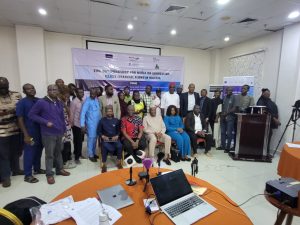
He added that the training was designed to equip journalists with practical skills in investigative reporting, data analysis, use of the Freedom of Information Act, procurement monitoring, beneficial ownership reporting, and ethical handling of sensitive financial crime stories.
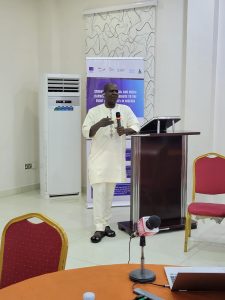
Delivering remarks on behalf of the SecFin Africa Project, Prof. Abdullahi Shehu, former Director General of GIABA and SECFIN representative, said the project’s overall objective is to support African and sub-Saharan countries in the fight against money laundering and terrorism financing.
“The goal for SECFIN is to strengthen CSOs and the media to combat terrorism, money laundering and terrorism financing in Nigeria, and to sensitize the media as the voice of society in the fight against IFFs,” Prof. Shehu stated.
Also speaking, Ibrahim Baba Mohammed, Chief GRC Officer of the Nigerian Financial Intelligence Unit, NFIU, described the workshop as timely.
“IFFs continue to drain resources meant for development. They have serious consequences and demand a collective response. We need financial crime reporting that follows the money trail and demands accountability,” Mohammed said.
Mohammed Isah, speaking for the Special Control Unit Against Money Laundering, SCUML, noted that millions of dollars are lost annually to IFFs across Africa and stressed the need to end the trend.
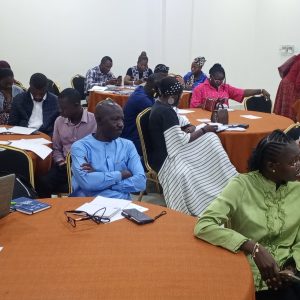
Participants were taken through sessions on the drivers, trends and development impact of IFFs in Nigeria, as well as the country’s legal and institutional frameworks. Resource persons highlighted the mandates of agencies such as EFCC, ICPC, NFIU, Nigeria Revenue Service, Nigeria Customs Service and the Bureau of Public Procurement.
ANEEJ said the success of the workshop would be measured by the quality of investigative reports, public awareness and policy conversations that follow.
The organisation expressed appreciation to the European Union, the SecFin Africa Project team, resource persons and partner institutions including GIABA, NFIU and SCUML for their support.
Atakpu urged the journalists to turn knowledge gained into actionable stories. “In the fight against illicit financial flows, facts matter, evidence matters, context matters and responsible reporting matters. The media must remain a watchdog, a public educator and a platform for accountability,” he concluded.