
 By joshua
 Ogbo: The Leader Who Delivers When It Matters Most
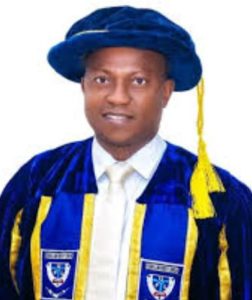
Prof. Ogbo
By Abu Micheal.
Recent events at Prince Abubakar Audu University, Anyigba have drawn national attention to the leadership of the Vice Chancellor, Prof. Salisu Usman Ogbo. For a man of many parts and an erudite Professor of Political Economy, challenges are not new terrain.
PAAU is familiar ground for Prof. Ogbo. He worked and contributed to the growth of the University, served under several Vice Chancellors, rose to become Dean, and later served as Rector of Kogi State Polytechnic, Lokoja before his current appointment. The problems he now faces at PAAU are not different from the ones he confronted and defeated at the Polytechnic. He left Kogi State Polytechnic with commendations and accolades, and the Maigari of Lokoja, Alhaji Mohammed Gambo, honoured him with one of the highest traditional titles, Wazirin Lisapi, in recognition of his service.
The environments of the Polytechnic and the University differ. Kogi State Polytechnic is located in the state capital, surrounded by security agencies that complemented the no-nonsense security architecture Prof. Ogbo built there. Student orientation also differed. The Polytechnic attracted learners from across the country, creating a “mini Nigeria” with broad exposure and greater awareness of rules and consequences. By contrast, over 90% of PAAU students come from Anyigba and neighbouring villages in the Eastern Senatorial District, many with limited exposure outside their immediate environment. That gap makes the task more demanding, but Prof. Ogbo is known for rising to challenges.
A leader who gets results when it matters is one who acts decisively when the institution is at a crossroads. Such a leader does not wait for crisis to overwhelm the system. He confronts vested interests, dismantles structures that reward failure, and replaces them with discipline, accountability, and vision. Results come not from speeches, but from difficult choices made at the right time. As Rector of Kogi State Polytechnic Lokoja, Prof. Ogbo proved this. He dismantled examination syndicates that had operated for decades and had devalued the institution’s certificates. The repositioning effort met stiff internal and external resistance. Lecturers, exams and records officers, admissions staff, and non-academic staff who profited from illegal rackets in accounts and other departments were cut off. The result made him enemies among a few, but earned him the loyalty of the majority who wanted excellence.
The state government supported his reforms. Infrastructure improved and the Polytechnic became a model. Even before a statewide ban on sign-out ceremonies, Prof. Ogbo had ended the practice at the Polytechnic. Cult activities tied to sign-out were banned. Known cultists and terror gangs were arrested, prosecuted, and jailed in some cases. Students who failed academically were rusticated. Discipline was restored. That is leadership that delivers when it matters most.
Now at Prince Abubakar Audu University, his early steps earned applause from stakeholders and the Anyigba community. Academic performance has improved. Lecturers are engaged in self-development and the University has witnessed more inaugural lectures than ever before, driven by motivation and reforms introduced by the Vice Chancellor. The institution began taking the shape many had long desired.
The recent cult-related incidents are therefore a setback the Vice Chancellor did not anticipate. But those who know Prof. Ogbo’s trajectory are confident this is a war he will win. Past administrations feared to confront cultism head-on, allowing it to consume gains and force both students and lecturers to accept that some “bad boys” were untouchable. That era, by all indications, is ending.
The fight against insecurity and cultism in tertiary institutions allows no retreat and no surrender. No university can thrive where students and lecturers live in fear, where lecturers are threatened for enforcing standards, where students face threats to their lives, and where female students suffer violations at the hands of armed groups.
Prof. Ogbo will need prayers and the full cooperation of staff and students to end PAAU Anyigba’s history as a safe haven for cultists. The time to return to the drawing board is now. This is not his fight alone. It is a collective responsibility. If his track record is anything to go by, his next steps will come like a thunderstorm. The monster of cultism will be defeated, and PAAU will be secured for learning.
For Prof. Salisu Usman Ogbo, this is more than another challenge. It is a test of will power. And by his antecedents at Kogi State Polytechnic and now at PAAU, he has shown what a results-driven leader looks like: courage in crisis, action over rhetoric, and impact that outlives the noise.
Abu Micheal, Journalist, Publisher, Member ANIPR, MNIM, Editorial Board Member, Guild of Interfaith Media Practitioners Nigeria, MCIA