
 By joshua
 ASIWAJU TINUBU IS NOT THE AUTHOR OF NIGERIA’S TRAGEDIES; HE IS CONFRONTING THEM
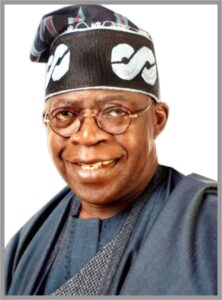
By Musa Bakare
There is a dangerous habit among nations in distress: when the harvest of decades of neglect arrives, the people look for the nearest man to blame rather than the architects of the disaster.
Nigeria is presently trapped in that scapegoating illusion.
President Bola Ahmed Tinubu did not create the structural contradictions of 1914. He did not design the political imbalances of 1960. He did not supervise the decades of corruption, waste, policy somersaults, economic indiscipline, educational neglect, and leadership failures that gradually weakened the foundations of the Nigerian state.
Astonishingly, strident critics and opposition political parties now seek to place on his shoulders the accumulated failures of generations.
The seeds of today’s insecurity, poverty, unemployment, and social dislocation were planted long before Tinubu entered Aso Rock. They were planted when colonial convenience was mistaken for nation-building in 1914. They were watered when successive governments refused to confront structural weaknesses after independence. The tragedies of the country matured through decades of leadership failure that consumed the future while celebrating the present.
Chief Obafemi Awolowo saw it coming. As far back as 1947, Awolowo warned that a nation that neglects education, economic planning, and human development would eventually become a victim of ignorance, poverty, instability, and insecurity. His warning was not merely political; it was prophetic. Tragically, Nigeria ignored him.
Today, the bandit in the forest, the kidnapper on the highway, the terrorist in the bush, and the unemployed youth roaming the streets are not products of the Bola Tinubu administration. They are products of decades of accumulated failures. They are the consequences of years when education was neglected, industries collapsed, agriculture was abandoned, and national development was replaced by political patronage.
A man who inherits a leaking roof cannot be blamed for the years of rainfall that damaged the building.
President Tinubu inherited a nation burdened by subsidy distortions, fiscal irresponsibility, mounting debt obligations, declining productivity, and widespread insecurity. What many critics and opposition conveniently ignore is that he chose not to postpone the hard decisions. He is confronting them.
The removal of fuel subsidy, the unification of the foreign exchange market, the expansion of student loan programmes, the establishment of regional development commissions, massive infrastructure investments, and renewed efforts to strengthen state and local economic capacities are not the actions of a leader running away from problems. That would be uncharacteristic of Asiwaju Bola Ahmed Tinubu. They are the actions of a leader determined to correct historic distortions.
Great nations are not built by leaders who avoid pain. They are built by leaders willing to endure criticism while laying foundations for future generations. Asiwaju Bola Ahmed Tinubu is one such leader.
There is a principle as old as creation itself: every harvest is the product of seeds sown long before. Nigeria today is harvesting many bitter fruits planted by decades of poor choices. Yet providence has entrusted the responsibility of recovery to President Bola Ahmed Tinubu. That burden is neither easy nor glamorous.
Those critics and opposition who blame Tinubu for every challenge facing Nigeria resemble a patient who blames the surgeon for the pain of an operation while forgetting the disease that made surgery necessary. The cure often hurts before healing begins.
The real question before Nigerians is not whether problems exist. They do. The real question is whether we possess the courage to address them honestly.
Was Tinubu President in 1914 when the colonial structure was imposed? Have there been any sincere and conscious attempts at correcting the anomalies?
Was Tinubu President in 1960 when foundational imbalances remained unresolved?
Was Tinubu President during the decades when educational opportunities were squandered, industries abandoned, and public institutions weakened?
What is obvious is that President Tinubu is the leader courageous enough to confront these inherited realities rather than merely complain about them.
History teaches that every generation encounters a defining leader. Some manage prosperity. Others confront chaos. Tinubu belongs to the latter category. He inherited a nation carrying the weight of unresolved historical contradictions and has chosen to tackle them head-on.
The choice before Nigerians is simple. We can continue the endless cycle of blame, outrage, and political bitterness, or we can unite behind the difficult task of rebuilding our country.
Chief Obafemi Awolowo identified the disease decades ago. Tinubu is attempting to administer the treatment.
The treatment may be bitter, but bitterness is not failure. Rather, it is the first sign that healing has begun.
Nigeria’s problems did not start with Tinubu. They will not disappear overnight under Tinubu. But future generations may well remember that when history demanded courage, Bola Ahmed Tinubu chose action over excuses, reform over convenience, and nation-building over popularity.
That is the difference between inheriting a problem and confronting it.
History, not social media noise, not critics or opposition rhetoric, will deliver the final verdict.
Musa Asiru Bakare, Political Analyst. Writes from Lokoja, Kogi State.
June 16, 2026