
 By joshua
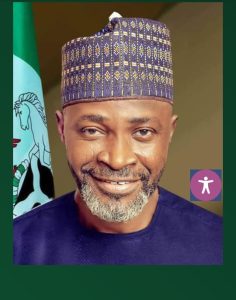
 Wemi Jones: Walking The Path Of History, Helping To Rewrite Kogi’s Education Story
By Abu Micheal
When Hon. Wemi Jones resumed as Kogi State Commissioner for Education, many naysayers wrote him off. A professional banker and seasoned event manager with no “traditional” education background, many critics doubted he could navigate the complex terrain of the classroom. They were wrong. Where there is a will, there is a way — and Hon. Jones has proven that maxim true. Focused, undistracted, and relentlessly forward-looking, he has turned skepticism into accolades. Today, his name is synonymous with reform, results, and quiet leadership.
He is visionary, tenacious, and results-driven. Visionary because he saw early that reform starts with data and identity. Under his watch, Kogi is rolling out the Learners Identification Number, ensuring no child is left behind. “Do not deny any child registration,” he warned — a policy now unlocking access to free education, WAEC, NECO Mock, BECE, scholarships, and tertiary admission. Tenacious because he fought to sustain 30 percent of the State Budget for Education when others would have trimmed it. He confronted exam malpractice, enforced accountability on private schools, and ensured teachers’ salaries were paid regularly. Results-driven because the numbers now shout what his humility whispers. Kogi’s performance in WAEC, NECO, and BECE has risen astronomically. Schools that once lagged at the bottom of National charts now compete with the best. More passes, more distinctions, more Kogi students in universities, and fewer out-of-school dropouts in Northern Nigeria.
For the first time, Kogi conducted a competence test to fill vacancies in state secondary schools and close to 5,000 qualified teachers are now in classrooms, with the first batch already working. Unpaid salary arrears became a thing of the past. The state built two new universities and established GYB Model Science Secondary Schools across the state. Seven hundred and twenty-eight primary schools are currently undergoing rehabilitation, building on earlier rehabilitations in past years, and crumbling classrooms now have roofs, chairs, and learning tools. Payment of WAEC fees by government lifted a heavy burden off parents, and scholarships that are ongoing will now target children captured through the LIN database. The 2025/2026 Annual School Census was digitized under his leadership, creating real-time data for planning, teacher deployment, and resource allocation.
The impact has not gone unnoticed by those on the frontlines. The Nigeria Union of Teachers in Kogi says Hon. Wemi Jones restored dignity to the teaching profession through regular salaries, competence tests, and training for principals that renewed teachers’ confidence. Principals under ANCOPSS note that for the first time they are being trained on data management, not just administration, and the LIN policy has brought order. Private school operators under NAPPS, initially skeptical, now trust his insistence on standards without killing private investment because he enforces rules with fairness. Civil society groups like KONGONET describe capturing every child through LIN as a game-changer for equity, ensuring girls, rural learners, and children with disabilities can now be tracked and supported. SUBEB and education secretaries say the rehabilitation of hundreds of primary schools and sustained WAEC fee payment show a leader who matches policy with funding and has made their work easier.
This quiet revolution is rooted in the man himself. Hon. Wemi Jones, FCIB, is a multi-talented, multi-disciplinary professional banker and financial service expert with more than two decades of corporate and high-valued entrepreneurship experience. A Fellow of the Chartered Institute of Bankers of Nigeria and an Associate of the Chartered Institute of Stockbrokers, he held command and managerial positions in several old-generation banks, and had directorship oversight on successful profit-yielding private enterprises before venturing into active partisan politics and election contesting. His political activities earned him the position of Commissioner for Education in two consecutive administrations — that of His Excellency Governor Yahaya Bello, CON, and now the cabinet of His Excellency Alhaji Ahmed Usman Ododo, FCA.
Under his stewardship, the Ministry of Education has witnessed progressive turnaround with basic contextual changes and strong innovative landscapes at basic, post-basic, and tertiary levels. He facilitated the establishment of a strong management and human resource team that superintends the entire Kogi State ivy educational institutions’ Governing Councils, from Prince Abubakar Audu University, Anyigba, to Confluence University of Science and Technology, Osara, Kogi State University, Kabba, Kogi State Polytechnic, Lokoja, Colleges of Education at Ankpa and Mopa, Colleges of Nursing and Health Sciences at Obangede and Idah, the Nigeria-Korea Friendship Institute, SUBEB, KGSSEB, the Agency for Adult and Non-Formal Education, the State Library Board, and the State Scholarship Board.
His entrepreneurship and managerial skills found synergism in the New Direction Administration of Governor Yahaya Bello and now in the administration of Governor Ahmed Usman Ododo, resulting in landmark achievements that touch every level of learning. He banned graduation ceremonies in nursery, primary, and secondary schools and the use of textbooks as workbooks, while Kogi was rated the best in SUBEB projects and programme execution by visiting agencies when compared to previous administrations. The ministry now has a reliable and credible data repository for all public and private schools through bio-data capturing of learners.
Kogi began recording progressive success in WASSCE and other external examinations, while 13,359 adolescent girls benefited under the Kogi State Adolescent Girls Initiative Learning Empowerment AGILE Conditional Cash Transfer. He refocused the state education system toward Science, Technology, Engineering, Arts and Mathematics, introduced school farming and Young Farmers Clubs, and launched “Radio Teacher” E-Learning during the COVID-19 lockdown so learners in remote areas could access instruction. The Students Exchange Programme involving Benue, Kwara, Niger, Kaduna, Nasarawa and Kogi runs hitch-free under the ministry’s anchorage.
At the tertiary level, he midwifed the establishment of Confluence University of Science and Technology in 2020 to meet the technological needs of a mineral-rich state, and the university now runs 30 STEM programmes. In 2023 he helped establish Kogi State University, Kabba, the second state-owned university under his watch. Students of Kogi origin across the country received N30,000 bursary each, while law school students got N300,000 each. Cultism was crushed and outlawed in all institutions from basic to tertiary, making campuses safe again, while full accreditation of all courses and uninterrupted academic calendars since 2016 became the norm.
On policy, he midwifed the enactment of the Kogi State Education Law 2020, the first of its kind since the state’s creation in 1991 and making Kogi the first in Northern Nigeria with a fully enacted education law. He brought Kogi onboard the World Bank-assisted AGILE programme, developed the State Education Strategic Plan 2021-2030 and Operational Plan, and introduced the School Adoption and Mentorship Programme that has drawn patronage from individuals and corporate bodies. The Gender in Education Policy and Implementing Guidelines 2025-2035 was drafted, the school academic calendar was modified during COVID-19 with Kogi setting the pace, and free education from basic to post-basic was institutionalized with government paying all internal and external examination fees including WAEC, NABTEB, JAMB, BECE and FSLC. He domesticated the new retirement age and length of service for teachers to retain experience, and strengthened the education data bank with tablets and direct uploading to the Nigeria Education Management Information System. As State Focal Person for Human Capital Development from 2021 to 2023, he led Kogi’s team to the regional conference in Lafia where other states were urged to emulate Kogi’s School Adoption and Mentorship Programme.
Aside from doing well in his ministry — a feat acknowledged by all and sundry — Hon. Wemi Jones hails from Kabba-Bunu LGA. He has combined political office with grassroots relevance so well that he remains a major pillar on which the APC stands in his ward. Despite his statewide impact, he stays connected to his base, proving that service and politics can walk together. He worked seamlessly with former Governor Yahaya Bello and now with Governor Usman Ahmed Ododo. Many say he seems lucky, but those close to him know it is not luck. It is favor, discipline, and results that have made two governors trust him with Kogi’s future.
He is the kind of leader you don’t notice at first — no loud speeches, no craving for the spotlight. His suits are simple, his smile steady, his questions sharper than his voice. But the impact speaks louder than he does. While others argue on microphones, he is signing off on new desks, approving principal trainings, and insisting that no child should be denied registration. Colleagues call him unassuming. Parents call him the reason their children are still in school. Students call him the man who gave them a chance. He leads from behind, letting reforms take the credit. In a sector crowded with noise, Hon. Wemi Jones remains proof that real influence doesn’t have to be loud — it just has to last.
Kogi’s education story is being rewritten, and the author is a banker who chose to become a builder of minds. Community service, humanitarian gestures, and philanthropic activities have earned him an array of honors, awards, medals, and distinctions, and he is entrusted with high-profile positions on boards of CSOs across Kogi, Lagos, and Osun. The path he walks is the path of history, and with every child captured, every teacher paid, every classroom rebuilt, he is helping to write a new chapter for Kogi — one where education is not a privilege, but a promise kept.
Abu Micheal is a Journalist, Publisher, ANIPR, MNIM, Editorial Board Member, Guild of Interfaith Media Practitioners Nigeria, MCIA