
 By joshua
 Non-Implementation Of 2025 Agreement: ASUU Warns Of Imminent University Crisis
By Ikhili Ebalu, Benin city
The Benin Zone of the Academic Staff Union of Universities (ASUU) has accused the Federal Government and several state governments of failing to implement key components of the 2025 FGN/ASUU Agreement.
The union warned that public universities may face another round of industrial crisis if urgent action is not taken.
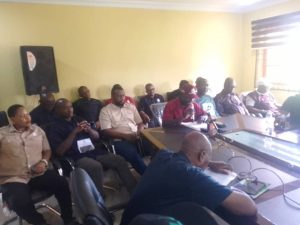
Addressing journalists at the University of Benin on Thursday, the Zonal Coordinator of the Benin Zone of ASUU, Prof. Monday Lewis Igbafen, said the union was deeply disappointed that the government had allegedly reneged on promises made during the unveiling of the agreement on January 14, 2026.
According to him, the agreement was expected to bring lasting industrial harmony to Nigeria’s public universities after years of negotiations over the 2009 ASUU agreement.
Igbafen disclosed that ASUU’s National Executive Council meeting held at Modibbo Adama University reviewed the level of implementation and concluded that the government’s actions were pushing lecturers “back to the trenches.”
The Union accused federal university administrators of distorting the implementation of allowances by selectively paying Consolidated Academic Tool Allowances (CATA), Earned Academic Allowances (EAA), and Professorial Allowances, contrary to the agreement which stipulates that the allowances be integrated into salaries.
ASUU also faulted several state governors for allegedly refusing to implement the agreement despite participating in the negotiation process through their representatives.
The Union further expressed displeasure over the Federal Government’s failure to inaugurate the Implementation Monitoring Committee (IMC), which it said was designed to prevent bureaucratic sabotage of the agreement.
ASUU criticised the Minister of Education, Maruf Tunji Alausa, over plans to establish a National Research and Innovation Development Fund without consulting the union.
Insisting that the proposal ignored the agreement’s provision allocating at least one percent of Nigeria’s GDP to research, innovation, and development.
The union listed other unresolved issues to include unpaid arrears of the 25–35 percent salary award, promotion arrears, unremitted third-party deductions, salary shortfalls caused by IPPIS, and the withheld salaries from the 2022 ASUU strike.
ASUU also condemned what it described as policy inconsistencies in the education sector, including the reversal of the mother-tongue policy in early childhood education, compulsory enrolment of academics into the Nigeria Education Repository Databank (NERD), and plans to establish a campus of Coventry University in Nigeria without stakeholder consultation.
The Union rejected reported plans by the government to scrap academic programmes considered “irrelevant,” describing the move as a threat to university autonomy and academic freedom.
It also raised concerns over alleged cases of financial mismanagement, irregular appointments, and disregard for due process by some government-appointed vice chancellors.
ASUU further accused the Niger State Government of attempting to seize the Bosso campus of Federal University of Technology Minna.
The Benin Zone of ASUU consequently called on the Federal Government and state governments to fully implement the agreement and resolve all outstanding issues without delay.
The union warned that failure to act could lead to the paralysis of public universities across the country.
The Benin Zone of ASUU comprises the University of Benin, Ambrose Alli University, Adekunle Ajasin University, Olusegun Agagu University of Science and Technology, Delta State University, Federal University of Petroleum Resources, University of Delta, Dennis Osadebay University, and Southern Delta University.