
 By joshua
 2027: WHO TRULY STANDS WITH NIGERIANS?
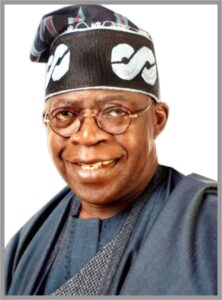
By Musa Bakare
As the march toward 2027 gathers momentum, Nigeria once again stands at a defining crossroads. The noise has started. The alliances are forming. The usual political merchants have returned to the market square with old promises wrapped in new slogans. But beyond the propaganda, insults, and social media hysteria lies one unavoidable question: who among the contenders truly possesses the courage, experience, structure, and political capacity to lead Nigeria through difficult times into stability and prosperity ?
The answer, whether critics like it or not, points strongly toward President Bola Ahmed Tinubu, the man former President Ibrahim Babangida called The Jagaban of Africa.
Nigeria today is not in search of a miracle worker or a social media celebrity. Nigeria needs a tested political engineer, a strategist with deep understanding of governance, economics, power management, and national cohesion. The country needs a leader who understands that rebuilding a nation battered by years of economic leakages, subsidy fraud, insecurity, and institutional decay requires painful but necessary decisions.
That is exactly what President Tinubu represents.
When he removed fuel subsidy, many screamed. Predictably, opposition politicians weaponized the immediate economic reactions for cheap political gain. Yet none of them had the honesty to tell Nigerians the truth: the subsidy had become one of the greatest scams in Nigeria’s history, enriching a tiny cartel while draining the lifeblood of the nation. Previous administrations lacked the courage to confront it because they feared political backlash.
President Tinubu confronted it head on.
History will remember that decision not as political suicide, but as economic bravery.
The same applies to the foreign exchange reforms. For years, Nigeria operated a distorted economic system that rewarded round tripping, corruption, and artificial wealth. President Tinubu inherited a fragile economy standing dangerously close to collapse.
Rather than continue the deception, he chose reform over comfort and long term rescue over temporary applause. That is leadership.
Now compare this with those in the opposition, revolving, recycled former high level office holders.
Atiku Abubakar has contested for the presidency almost endlessly. Nigerians know him. They know his style, his ambitions, and his politics. Yet after decades on the national stage, many still struggle to point to a transformational political legacy capable of inspiring a new Nigeria. His politics has largely remained a revolving cycle of defections, elite bargaining, and perpetual presidential pursuit.
Then comes Peter Obi, whose popularity rose largely from a weaponized public frustration and emotional populism. His supporters created a movement online, but governing Nigeria is far more complicated than trending hashtags and motivational speeches. Nigeria is not a student union government. It is a deeply complex federation requiring political depth, national networks, negotiation capacity, institutional understanding, and crisis management experience; qualities President Tinubu is offering.
The reality many sincere Nigerians admit is that President Bola Ahmed Tinubu remains the most influential political architect in modern Nigerian history. Long before becoming president, he built structures, nurtured leaders, strengthened opposition politics, and played a central role in the democratic evolution that eventually ended the PDP’s long standing, unproductive dominance in 2015.
Many of those attacking him today are ingrates, products of the political structures he build.
President Tinubu is not perfect. No leader is. His administration is consistently working aggressively to cushion hardship, create jobs, strengthen security, stabilize prices, and restore public confidence. Resilient Nigerians are aware that leadership should not be judged by temporary discomfort. They are judging President Tinubu by the vision, courage, capacity, and direction of his administration.
By 2027, Nigerians will not return their destiny to recycled promises and emotional politics. They will stay the course with President Tinubu, a leader pursuing structural reforms aimed at rebuilding the foundation of the nation.
The 2027 election will not merely be about personalities. It will be about who has the toughness to make difficult decisions, the political intelligence to manage Nigeria’s diversity, and the capacity to move the country from consumption to production. On that score, President Bola Ahmed Tinubu towers above the fragmented opposition.
While others are still campaigning with anger, resentment, and blame, President Tinubu is governing. While critics shout from television studios and social media spaces, he is carrying the burden of difficult national decisions.
In the fierce political battlefield that 2027 is shaping up to be, Nigerians will ultimately decide that experience, structure, courage, and political mastery matter far more than noise. When the dust finally settles, the question may no longer be whether President Tinubu is under attack. The real question will become whether any of his challengers truly possess the weight, depth, and national capacity to replace him.
Musa Asiru Bakare
Founding member of the APC I political analyst
Writes from Lokoja, Kogi State
May 12, 2026