
 By joshua
 TINUBU’S POLITICAL PLAYBOOK: HOW STRATEGY AND STRUCTURE DELIVERED THE PRESIDENCY
By Iyke Orji
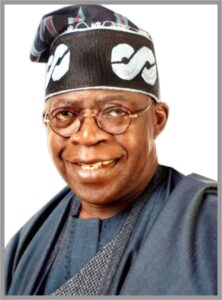
For all the criticism that has trailed his presidency, one fact is hard to dispute — Bola Ahmed Tinubu mapped his political journey with precision and patience.
Tinubu never spent 16 years in power at the federal level. His path ran through the opposition, from the Alliance for Democracy (AD) to the Action Congress (AC), then the Action Congress of Nigeria (ACN), before he played a leading role in forming the ruling All Progressives Congress (APC).
Even while in opposition, he maintained a firm grip on Lagos State and extended his influence by helping to unseat the PDP in Edo, Osun, Ekiti, and Ogun. He also backed Chris Ngige’s governorship bid in Anambra and supported candidates across multiple states, building a nationwide political network.
In the years leading to APC’s 2015 victory, there were few elections Tinubu did not personally tour across all 36 states. From Senate to House of Representatives to State Assembly seats, ACN’s reach expanded under his direction. Despite intense pressure, he never defected — and those he backed largely stayed loyal.
That same political weight and calculation allowed him to influence national outcomes. Against the wishes of then-President Goodluck Jonathan, Tinubu supported PDP’s Aminu Tambuwal to become Speaker of the House of Representatives. He also installed Femi Gbajabiamila as a member of the House for 20 years before seeing him rise to Speaker.
The chain continued: Tinubu backed the last president who handed over power to him, supported the immediate past vice president, and ultimately positioned himself for the presidency.
The 2014 merger that birthed the APC remains the most significant political integration by opposition parties in Nigeria’s history. No politician before him had pulled it off. Step by step, the strategy played out, culminating in his election as president.
*A Contrast in Opposition Politics*
The piece also draws a contrast with Peter Obi, arguing that the former Anambra governor has yet to build the same level of grassroots structure and political depth.
The writer points to Obi’s reluctance to engage in the Anambra governorship race and suggests that while Tinubu has worked with Obi’s home-state governor and extended influence into Enugu — a state considered Obi’s political base — the opposition camp lacks the same strategic hold on its territory.
The example of Ngige defeating Prof. Dora Akunyili in Anambra Central, despite Obi’s backing as sitting governor, is cited as evidence that politics remains local. “You must first hold your territory firmly, manage your past victories, and then advance for more,” the writer notes.
*The Call for Strategic Opposition*
The article concludes with a call for Peter Obi to rise as the true face of the opposition. It warns that without deliberate planning, structure, and grassroots mobilization, the opposition risks wasting its votes and effort.
“Tinubu planned all the way, taking into account every possible consequence, obstacle, and twist of fortune that could reverse hard work and hand glory to others,” the writer says. “We are wrestling against the Jagabanic powers of Asiwaju, and it shouldn’t be treated with kid gloves. Anyone not advising Peter Obi to sit up at this point is doing APC’s bidding.”