
 By joshua
 Renewed Hardship, Not Renewed Hope: A Blunt Assessment of Nigeria’s Reality
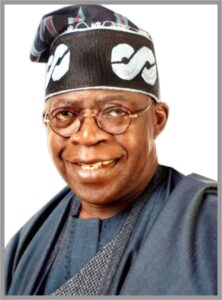
By Christopher Sunday
There is a growing frustration across Nigeria, and it is no longer hidden. The promise of “Renewed Hope” under the administration of Bola Ahmed Tinubu is, for many citizens, fast becoming a symbol of renewed hardship.
The facts are not abstract, they are felt daily. The naira has been brutally devalued, wiping out savings and shrinking incomes overnight. Fuel prices have skyrocketed, triggering a chain reaction that has pushed the cost of everything, food, transportation, rent, beyond the reach of ordinary Nigerians. Market prices are no longer rising, they are exploding.
At the same time, government borrowing continues to surge, raising a fundamental question: who benefits from these loans, and who will repay them? Certainly not the struggling citizen who can barely afford a meal.
Hunger is no longer a distant problem, it is immediate and widespread. Families are making impossible choices between food, healthcare, and education. Yet, instead of relief, Nigerians are confronted with increasing taxation and little to no visible empowerment programs. Jobs are scarce, opportunities are shrinking, and hope is thinning out.
Security, which should be the most basic responsibility of any government, remains fragile. Insecurity continues to disrupt lives and livelihoods, while confidence in the system steadily erodes. Institutions are failing, systems are weak, and the average Nigerian is left to navigate survival alone.
And then there is electricity, the most basic driver of modern economic growth. The President made a clear and public commitment that if power supply does not improve, Nigerians should not vote for him for a second term. Today, that statement stands as a direct challenge. Has power improved in any meaningful way? Are businesses thriving because of stable electricity? Are homes enjoying consistent supply? The honest answer for most Nigerians is no.
So, what exactly has changed?
Leadership is not entitlement. It is not inherited, and it is certainly not sustained by force of ambition. It is earned through performance, through results, and through the tangible improvement of people’s lives.
If governance continues on this trajectory, then the call for accountability will not just be political, it will be inevitable. Nigerians are watching, enduring, and increasingly asking hard questions.
And in a democracy, those questions cannot be ignored forever.