
 By joshua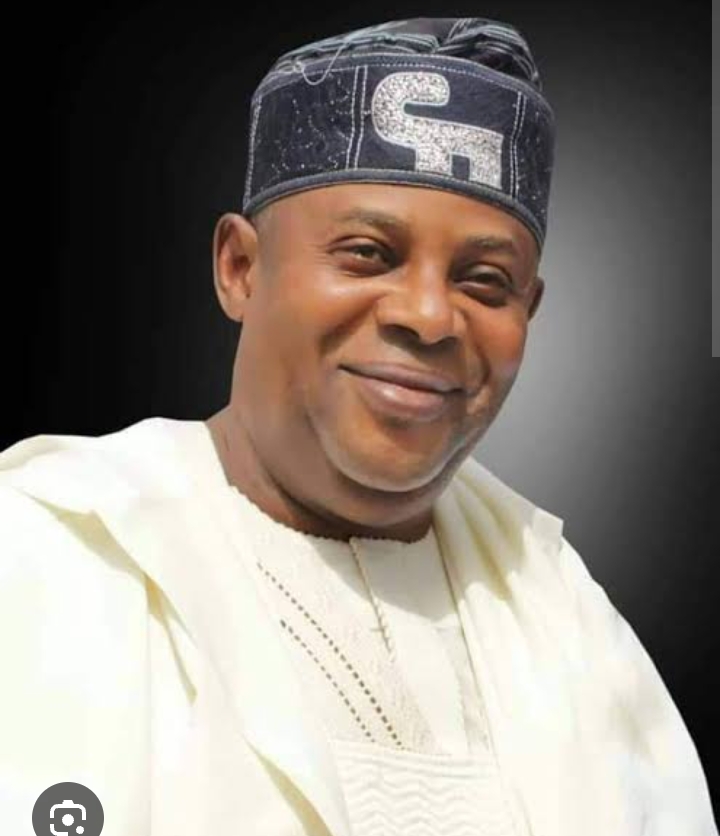
2027: After 29 Years of Igala-Ebira Rule, It’s Okun’s Turn — And the Cap Fits Faleke
By Adedayo Medayese
The mathematics of Kogi State politics has never been complicated. Since 1999, when Nigeria returned to civilian rule, the state’s governorship has rotated between two of its three major ethnic nationalities—Igala and Ebira—while the Okun people of Kogi West have watched from the sidelines. As the 2027 election approaches, that arithmetic has become impossible to ignore. By the time Governor Ahmed Usman Ododo completes his first term, Kogi East (Igala) would have governed for approximately 17 years, while Kogi Central (Ebira) would have held power for about 12 years. Kogi West, the third leg of the tripod, has never produced a governor since the state was created in 1991.
This is not a cry for sympathy. It is a demand for equity. And it is a demand that now has a face—that of Rt. Hon. James Abiodun Faleke, the member representing Ikeja Federal Constituency in the House of Representatives, a son of Okun land from Ekinrin Adde in Ijumu Local Government Area.
The argument for zoning the governorship to Kogi West in 2027 rests on simple justice. The Okun nation has been a loyal partner in every political arrangement that has governed Kogi State, yet it has been relegated to the position of deputy governor—a role that Okun Leaders League has aptly described as that of a “spare tyre,” toothless and powerless. Between 1992 and 1993, and again between 2012 and 2016, Okun sons served as deputy governors. Neither occasion translated into meaningful development for the zone.
By 2027, the numbers will speak for themselves. Igala rule from 1999 to 2015, followed by Ebira rule from 2015 to 2027, would mean 28 years of governance concentrated in two zones. Add the Second Republic tenure of Alhaji Adamu Atta from Ebiraland and the Third Republic stint of Prince Abubakar Audu, and the imbalance becomes even starker. Kogi West has contributed votes, loyalty, and stability to every winning coalition. It deserves more than a consolation prize.
The cap fits Faleke for reasons that go beyond his Okun heritage. His political story is woven into the fabric of Kogi State’s modern history. In 2015, he was the running mate to the late Prince Abubakar Audu on the APC ticket that secured over 240,000 votes before Audu’s sudden death plunged the state into a constitutional crisis. Faleke refused to accept the party’s decision to transfer that mandate to another candidate and pursued the matter through the courts—a fight that, though unsuccessful, established him as a man of conviction.
Since then, Faleke has grown into one of the most consequential political figures of his generation. As Chairman of the House Committee on Finance, he sits at the intersection of executive policy and legislative appropriation, overseeing the fiscal framework of the Renewed Hope agenda. He founded the Tinubu Support Groups, building the nationwide structure that helped propel President Bola Ahmed Tinubu to power, and served as Tinubu’s personal agent during the 2023 presidential primaries. His appointment to the Lagos State APC Governance Advisory Council—the highest political decision-making caucus in Lagos—places him within the inner circle of the political machine that has shaped Nigeria’s most consequential state for decades.
Critics will say Faleke is a “Lagos politician.” But that is precisely the point. Kogi State needs a governor who understands how the federal system works, who can negotiate with Abuja, attract investment, and leverage national networks for local development. Faleke has spent two decades learning governance at the feet of the best political managers in the country. The Lagos template—progressive leadership, infrastructure development, and economic transformation—is what Kogi needs, and Faleke is positioned to replicate it.
The calls for an Okun governor are not new. But 2027 represents a historic window. The Okun Youth Vanguard has endorsed Faleke as its preferred candidate, declaring that “politics should not permanently belong to one senatorial district”. The Kogi Diaspora has thrown its weight behind him, pledging financial and moral support for his campaign. Former Commissioner for Information Dr. Tom Ohikere has insisted that equity and fairness require Kogi West to produce the next governor.
The Igala political establishment has made clear it will not surrender its ambition without a fight. That is expected. But the Igala people have had their turn—17 years of it. The Ebira people have had theirs—12 years. The Okun people have waited patiently, and their patience should not be mistaken for weakness.
In 2027, Kogi State has a choice. It can continue the politics of exclusion, or it can embrace a new era of rotation, equity, and inclusion. For the Okun people, this is not just another election. It is a defining moment. For James Abiodun Faleke, it is a homecoming long overdue.
The cap fits JAF. And the time is now.
Adedayo Meidayese is a Political Analyst from Kabba