
 By joshua
 Idah Federal Constituency: Time for Onyedega District to Speak for Ibaji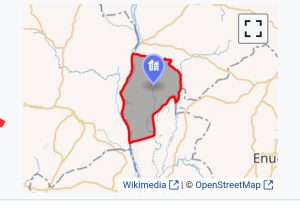
By Ojoka Reuben, from Onyedega
Politics, at its noblest, is the pursuit of the common good. And democracy, its highest form, is built on the premise that every voice matters, that power must be shared, and that no community should dominate another in perpetuity. These ideals are more than rhetorical flourishes — they are moral and philosophical imperatives that define just societies and authentic leadership.
In Ibaji Local Government Area of Kogi State, these principles have yet to be fully realized. The political story of Ibaji — particularly in its representation at the House of Representatives for the Idah Federal Constituency — reveals a pattern of enduring concentration of power in a single axis: the Unale District. While their contributions to our collective history are recognized, the continued exclusion of other zones, particularly Oñyedega District, undermines the spirit of fairness and political balance upon which democratic societies thrive.
The emergence of Hon. Frank Nneke, the first-ever representative of Idah Federal Constituency, and other prominent political actors from Unale, demonstrates that district’s firm hold on the structures of federal representation. Yet, over two decades later, Oñyedega District — with its rich cultural heritage, vast human capital, and political potential — has never produced a representative for Ibaji at the National Assembly. This is no longer merely a matter of oversight; it has become a political injustice.
From the lens of democratic theory, such persistent exclusion negates the principle of representational justice. As political philosopher John Stuart Mill argued, representation must reflect the diversity of the polity — not just in name but in active participation. When a district like Oñyedega, with a large population and strategic relevance, is kept out of the equation, democracy falters. The system becomes skewed, and the people lose trust in its integrity.
What is even more glaring is that Oñyedega is not lacking in capable, credible, and qualified individuals. On the contrary, the district has produced some of the finest minds in academia, public service, administration, and enterprise. What has been denied is not leadership but the political space to emerge. The machinery of influence and nomination continues to be controlled by entrenched interests who see representation as an inheritance rather than a rotating privilege of service.
One must also consider the philosophy of inclusion. In Plato’s vision of the just society, justice means that each part of the society performs its rightful role and is given equal opportunity to contribute to the well-being of the whole. If Ibaji must thrive as a united front within the Idah Federal Constituency, then Oñyedega must be seen — and empowered — as an equal stakeholder, not a subordinate observer.
It is morally untenable and politically counterproductive to continue to sideline a district that serves as a vital socio-economic and geographic corridor in Ibaji. Oñyedega is not on the periphery; it is at the heart of Ibaji’s identity, history, and aspirations. Any claim to represent the whole of Ibaji at the federal level without the voice of Oñyedega is incomplete and unjust.
This is not a call for sympathy; it is a call for political realignment and justice. The time has come for political actors, stakeholders, and party leaders within and beyond Ibaji to consciously and deliberately support a credible candidate from Oñyedega District for the House of Representatives. This is how unity is built — through intentional acts of fairness and rotation, not endless cycles of exclusion.
To continue to recycle representatives from the same political zone is to foster resentment and stagnation. But to open up the space for Oñyedega is to energize the political base, inspire hope among the youth, and reinforce the belief that democracy can work for all — not just for some.
In conclusion, equity must be practiced, not preached. The health of a political system is measured by how well it listens to its least-heard voices. Oñyedega has waited long enough. Ibaji will be stronger, more united, and more respected when Oñyedega is given the opportunity to speak at the national level.
Let Onyedega lead. Let equity prevail. The time is now.