
 By joshua
2027: Ebonyi voters will decide, not political godfathers, says LP’s Ezeh
By Our Correspondent
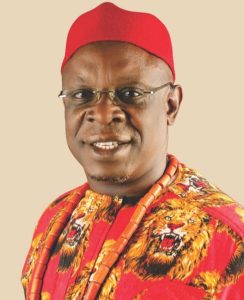
The Labour Party candidate for Abakaliki/Izzi Federal Constituency, Dr Ezeh Emmanuel Ezeh, has challenged the influence of political godfathers and powerful stakeholders in determining electoral outcomes in Ebonyi State, insisting that the electorate, rather than political elites, holds the ultimate power to decide who governs them in 2027.
Ezeh said no amount of political endorsement, elite consensus or mobilisation by influential individuals could substitute for the independent decision of voters, declaring that the people of Ebonyi State would determine the outcome of the forthcoming general elections through their votes.
The LP candidate stated this on Tuesday while reacting to comments by the Minister of Works, Senator David Umahi, at a stakeholders’ town hall meeting held at the Christian Ecumenical Centre, Abakaliki.
Umahi had, during the meeting, declared that the South-East had no presidential candidate ahead of the 2027 elections, dismissing the presidential aspiration of former Anambra State Governor, Peter Obi.
The minister questioned Obi’s political standing in comparison with other prominent South-East leaders, including former Senate President Anyim Pius Anyim, former Governor Sam Egwu, former Chairman of the Revenue Mobilisation, Allocation and Fiscal Commission, Elias Mbam, and himself.
He also urged Ebonyi stakeholders to mobilise support for President Bola Tinubu and the All Progressives Congress (APC), calling for the party’s candidates to receive overwhelming electoral support across the state.
Umahi reportedly challenged the stakeholders to work towards delivering 1.3 million votes for Tinubu and Governor Francis Nwifuru in the 2027 elections.
But Ezeh, in his response, argued that the political preferences of influential individuals could not be imposed on the electorate, stressing that democracy derives its legitimacy from the consent of the governed.
“The future of this nation will not be decided by stakeholders, special interest groups or political elites. It will be decided by the people. Ndi Ebonyi will have the final say,” he said.
He maintained that voters were increasingly conscious of their political rights and would make electoral decisions based on their experiences with governance, the performance of political officeholders and their expectations for a better future.
The Labour Party candidate also dismissed claims that opposition political forces in Ebonyi lacked the capacity to challenge the ruling party, insisting that his camp was prepared for the political contest ahead.
According to him, the opposition was not expecting political power to be transferred to it without a struggle, adding that its determination to challenge the established political order remained unwavering.
“Let me assure oppressors of one thing: we do not expect power to be handed to us on a silver platter, and we have no intention of making it easy for Ndi oppressors either,” he declared.
Ezeh recalled that when some political actors claimed there was no opposition in Ebonyi, his camp deliberately avoided unnecessary verbal confrontations and concentrated on demonstrating its political activities.
“When they claimed there was no opposition in Ebonyi, we didn’t bother responding. We simply showed workings,” he stated.
He further accused unnamed political actors of resorting to threats, intimidation and fear instead of engaging the electorate with their records in office and policy proposals.
He argued that political competition should be driven by persuasion, accountability and the presentation of credible alternatives rather than coercion or violence.
“Let us be absolutely clear: threats and violence are not a winning strategy. They are the refuge of those who have run out of ideas, lost the confidence of the people and can no longer defend their record,” Ezeh said.
He added that intimidation should not be mistaken for political strength, insisting that responsible leadership required the ability to convince citizens through ideas and demonstrable performance.
“Anyone can choose violence. Anyone can spread fear. There is nothing courageous, intelligent or visionary about that. Violence and political madness are not signs of strength; they are confessions of weakness,” he added.
On the political and developmental trajectory of Ebonyi State, Ezeh alleged that the state lost its direction in 2015 but said the aspirations of its people had remained alive despite what he described as years of difficult experiences.
He attributed the resilience of opposition figures to the enduring hope for a different political and developmental direction, insisting that the people deserved an opportunity to determine their collective future.
The LP candidate also criticised the APC-led Federal Government under President Tinubu, alleging that insecurity, governance challenges, unfulfilled promises and squandered opportunities had heightened public dissatisfaction.
He maintained that the 2027 elections would offer Nigerians and Ebonyi residents an opportunity to assess the performance of political officeholders and determine whether they deserved another mandate.
Ezeh consequently declared that his political camp would continue to mobilise support for an alternative political direction, insisting that the electoral process must remain free from intimidation and undue interference by powerful interests.
“In 2027, Ebonyi people will speak with one voice, and that voice will be a rejection of APC,” he declared.
He urged political stakeholders to respect the democratic rights of citizens, noting that while influential individuals were entitled to express their political preferences, the ultimate decision on who occupied elective offices belonged to the electorate.