
 By joshua
RoLAC, WACOL Trains Magistrates, Customary Judges On Rights Of GBV/SGBV Survivors In Edo
By Ikhili Ebalu Benin city
The Womenaid Collective (WACOL)
in collaboration with the Rule of Law and Anti-Corruption (RoLAC) have organised a two day training workshop for Magistrates and Area Customary Judges on Effective Implementation of Key Legislation and Polices that Protect the Rights of GBV/SGBV Survivors in Edo.
The training was meant to strengthen the capacity of members of the lower Bench in promoting effective implementation of relevant legislation and policies that protect the rights of survivors of GBV/SGBV and also to strengthen the capacity of Magistrates and Customary Court Presidents in the State.
Again, also to provide accessible, fair, survivor-centred, gender-responsive and accountable justice for marginalized groups and survivors of Sexual and Gender-Based Violence (SGBV), in accordance with Nigerian laws, constitutional guarantees and relevant international and regional human rights standards.
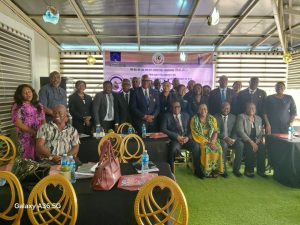
The workshop which took place on Tuesday 20th to Wednesday 21st October, 2026 at ADJ Royalty Hotel, on Boundary Road, Benin City was attended by Magistrates and Area Customary Judges in the state.
In her opening remarks, the Co-ordinator of RoLAC, Uchenna Nwokedi appreciated WACOL for effectively organising the workshop noting that laws are effective because of the way it is interpreted and because of the way it is applied, interpretation and application matters a lot.
Kwoledi opined that the issues of how the laws and policies that address the issue of gender-based violence is properly addressed, will continue to have these issues of victims or survivors of sexual and gender-based violence being denied justice. And so that’s why WACOL was commissioned to support RoLAC with training of judicial officers and other activities to ensure that these particular young women and men have access to justice.
Kwoledi further disclosed that RoLAC is currently supporting the State Department and the Ministry of Human Services and other services noting that it is expected this will help address some of the gaps already noticed.
On her part, a representative of WACOL, Dr. Helen Kalu gave a motive of initiating the workshop stating that gender-based violence cases are fragile and they are cases that need peculiar attention and procedure.
According to her, “We are bringing to their knowledge, refreshing their memory on the procedures allowed by the court in handling sexual and gender-based violence cases in those states, so that they will be able to do effective and efficient justice to everyone that will appear before their court. So, it is very, very essential to remind them what they have learned, to also tell them the evolving issues.
She said things like technology – facilitated violence are not found in all the law books and policies and laws, you will not see this particular category of violence mentioned. So, it is also to bring to their mind that GBV is evolving.
“Therefore, the perpetrator or aggressor should just go without facing punitive measures. So, they need to think outside the box, bring in the Cyber Crime Act, and also look at the other provisions of the law, to ensure that justice is served to survivors that will approach the court.”
Going further, Dr. Kalu stated that “the workshop is to strengthen the capacity of members of the lower bench in promoting effective implementation of relevant legislation and policies that protect the rights of survivors of GBV/SGBV and also to strengthen the capacity of Magistrates and Customary Court Presidents in Edo State.
As well as to provide accessible, fair, survivor-centred, gender-responsive and accountable justice for marginalized groups and survivors of Sexual and Gender-Based Violence (SGBV), in accordance with Nigerian laws, constitutional guarantees and relevant international and regional human rights standards. She stated
She stated that at the end of the training, participants should be able to enhance understanding of the rights of marginalized groups and SGBV survivors, including women, children, persons with disabilities, persons living in poverty, widows, and other vulnerable populations.
“The training will also strengthen knowledge of the Nigerian legal and policy framework governing SGBV, access to justice, equality and non-discrimination, including relevant provisions of the Constitution, Violence against Persons (Prohibition) Act, Child Rights legislation, Evidence Act, Administration of Criminal Justice framework and applicable Edo State laws,” she added.
The Resource persons were Hon. Justice Ehinon Anthony Okoh and Hon. Justice (Dr) Bright Eraze Oniha both of the National Judicial Council.
The first day of the workshop focused on Analysing Violence Against Women and Girls – Understanding Roots, Forms and Impact, Legislation and Police Making; Existing Laws and Policies on Women’s Rights; Existing Laws and Policies on Women’s Rights: State Laws Dealing With SGBV; Access To Justice For Women/Girls and Survivors of SGBV and Access to Justice For Women/Girls and Survivor of SGBV.
Day Two of the workshop focused on Judicial Gender Stereotyping and Women’s Access to Justice; Promoting Women’s Rights Through the Practice of Magistrates, Area and Customary Court Judges and Role of the Court/Judiciary in the Effective Enforcement of Protection Orders.
Some participants applauded RoLAC and WACOL for the initiative stating that through the training , Judicial officers have been able to identify the effect of gender-based violence as the judicial officers we now go back to our courtrooms to continue to play inter-countrooms in ensuring that these persons who are vulnerable are properly protected.