
 By joshua
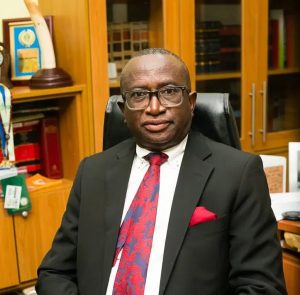
 Needless Attack on Senator Victor Ndoma-Egba: Setting The Record Straight
By Comrade Agbor Idabi
There is a fundamental difference between legitimate political criticism and deliberate political revisionism. Mc Okirika, the author of the article titled “The 12 Years of Wasted Opportunity: How Senator Ndoma-Egba Failed Cross River Central,” is certainly entitled to his opinion, but the responsibility that comes with publishing such a sweeping assessment is to first undertake the necessary research and engage comprehensively with the facts. Unfortunately, the article appears to have reached a conclusion before adequately examining the breadth of Senator Victor Ndoma-Egba’s record in public service. An opinion does not become historical fact merely because it is published, amplified, or presented with the confidence of an acclaimed activist or content creator.
If the objective was to discredit Senator Ndoma-Egba’s years of service, then the author should have done the homework required to examine the record in its entirety. The documented interventions, legislative contributions, educational initiatives, infrastructure advocacy and national and international responsibilities associated with Ndoma-Egba’s public service provide a much broader historical record than the article suggests. Those achievements do not need exaggeration or embellishment to speak for themselves when properly researched and placed in context, they provide a compelling counterpoint to a narrative built primarily around alleged failures.
Indeed, the fuller record may prove uncomfortable for anyone who approaches the subject with a predetermined conclusion. The achievements attributed to Senator Ndoma-Egba have a way of confronting, and potentially overshadowing, an incomplete narrative constructed without sufficient research. The appropriate response, therefore, is not to trade insults, but to place the facts on the table and allow the historical record to speak for itself.
There is also a difference between holding public office holders accountable and manufacturing narratives for relevance and recognition. Activism demands facts, consistency and intellectual honesty; content creation demands responsibility for the claims being circulated. Public commentary should not become an avenue for rewriting history simply to create a personal profile or project oneself as the ultimate political watchdog.
Senator Ndoma-Egba’s record in public service deserves to be examined through verifiable evidence, measurable contributions and the historical circumstances of his tenure not through selective recollections, convenient omissions or sensational headlines designed to attract attention. Those who seek to hold leaders accountable must also be prepared to hold their own narratives accountable to facts.
Criticism is healthy in a democracy. But when criticism is stripped of context, evidence and fairness, it ceases to be constructive accountability and becomes little more than political revisionism dressed up as activism.
If we are discussing Senator Victor Ndoma-Egba’s twelve years in the Senate, we must consider the whole record not only the shortcomings.
Ndoma-Egba represented Cross River Central from 2003 to 2015 and rose from Chairman of the Senate Committee on Media and Public Affairs to Deputy Senate Leader and ultimately Senate Leader. He was deeply involved in legislation, constitutional reform, national policy and the defence of democratic institutions.
At the end of his tenure, he had introduced 39 bills, including the Freedom of Information Bill, which became law. So, when people ask what he did for twelve years, the first answer is simple: He made laws.
The Freedom of Information Act was not merely another piece of legislation; it established a statutory framework through which citizens could demand access to information held by public institutions and use that information to interrogate government actions and promote accountability. The Act expressly gives any person the right to request information in the custody of a public institution, without having to demonstrate a specific interest in the information sought.
It is therefore worth putting the argument in its proper historical context. If Senator Ndoma-Egba’s contribution to the legislative journey of the Freedom of Information Act is being acknowledged, then the irony should not be lost on those who now invoke transparency and accountability: the very legal framework that makes it possible for citizens, journalists and activists to formally demand government records and scrutinise public institutions is itself part of the democratic legacy of Senator Victor Ndoma-Egba and the National Assembly of that era.
The Freedom of Information Act was passed by the National Assembly in May 2011 and assented to by President Goodluck Jonathan on 28 May 2011. Its stated purpose was to make public records and information more freely available and provide citizens with access to information held by public institutions.
Consequently, anyone who invokes the principles of transparency, access to information and governmental accountability today should also acknowledge the institutional and legislative foundations that made those demands considerably stronger. Accountability should not be selective: those who benefit from democratic reforms should be intellectually honest enough to recognise the people and institutions that helped create the framework they now rely upon.
He was also associated with the National Assembly’s adoption and defence of the Doctrine of Necessity during President Umaru Musa Yar’Adua’s illness. That intervention provided a constitutional-political pathway for Vice-President Goodluck Jonathan to assume the functions of Acting President and helped prevent a dangerous constitutional vacuum.
These were national contributions, not constituency contracting. To erase them because one is assessing constituency performance is to confuse national leadership with local infrastructure.
The claim that Cross River Central has nothing to show for Ndoma-Egba’s tenure is contradicted by the available record. At different times, he inspected 76 out of 97 constituency projects attracted during his twelve years. And with your doubt am verifying them for you with pictures and locations for your independent verification.
Among those attributed to his representation were the Federal Specialist Hospital in Ikom, Bendeghe Ekiem Water Project, Irruan Dam, Edor Surface Water Scheme, police barracks at Itigidi and Flood and erosion-control works in Apiapum, Library Complex, Community Secondary School Ugep, Ikom-Ajassor-Mfum Highway, Classroom Block, Etomi, Primary Health Centre, Akparabong, Renovation of Ikom Police Barracks, Classroom Block, Govisco, ICT Centre, Govisco, Water supply Scheme, Wula, Classroom Block Mfom Osokom with Hand Pump Borehole and many others
Senator Victor Ndoma-Egba’s tenure as Chairman of the Niger Delta Development Commission should also be considered when assessing his contribution to Cross River State. During that period, he placed considerable emphasis on infrastructure interventions in the state, particularly roads and education.
Among the significant interventions were two separate interventions done on the Calabar–Itu road, a critical artery connecting Cross River with Akwa Ibom; interventions along the Odukpani–Akamkpa–Biase–Ugep corridor; and rehabilitation works along the Ikom–Boki–Obudu axis. Contemporary reports documented NDDC intervention on the Calabar–Itu road as well as remedial works on sections of the Calabar–Ikom and Ikom–Obudu corridors.
The intervention was not confined to roads. Primary schools across the 18 Local Government Areas of Cross River State received attention through renovation and rehabilitation initiatives, including new structures, repairs to existing facilities, furniture and educational materials. Reporting from the period also records extensive NDDC involvement in the rehabilitation of schools and roads across the state.
This is important because the assessment of Senator Ndoma-Egba’s record should not be reduced to whether every project was initiated solely by him personally. As Chairman of the NDDC, his responsibility was to provide leadership and direction within the Commission’s mandate, and the available record shows that Cross River State was given significant attention during his tenure.
Indeed, in 2019 Ndoma-Egba publicly stated that a substantial proportion of the road and school rehabilitation carried out in Cross River during the preceding two years had been undertaken by the NDDC or the Ministry of Niger Delta Affairs.
Therefore, any serious evaluation of his public service record must take these interventions into account. One may debate the scale, cost, execution and attribution of individual projects, but it would be historically incomplete to discuss Ndoma-Egba’s years in public service while ignoring the road and school interventions undertaken during his NDDC tenure.
Senator Victor Ndoma-Egba was neither a Governor nor a federal contractor, and he did not personally control the national budget. As a Senator, his constitutional responsibilities included legislation, representation, oversight and advocacy, including the responsibility to attract federal attention, interventions and development projects to his constituency and state which he graciously did.
It is therefore important to assess his record within the realities of that office. Ndoma-Egba consistently placed Cross River among his priorities, using his position and influence at the federal level to advocate for projects and interventions that could benefit the state. His value as a Senator was not simply in the number of motions he sponsored or speeches he made on the Senate floor, but also in his ability to engage federal institutions, influence attention towards Cross River and pursue projects capable of addressing the state’s infrastructure and developmental needs.
This commitment was particularly evident in the area of education and human-capital development. Among the initiatives attributed to his advocacy was the facilitation of the establishment of the National Open University of Nigeria presence in Ikom, where he supported its take-off by helping provide the facilities and requirements necessary for academic activities to commence. He was also associated with efforts that supported the development of the Faculty of Law at the University of Calabar, strengthening the university’s capacity to provide professional legal education.
His educational advocacy was not limited to existing institutions. He also championed the demand for a Federal tertiary institution for Cross River Central Senatorial District, an effort that contributed to the emergence of what is today the Federal Polytechnic, Ugep. These interventions are significant because access to tertiary education is not merely about constructing buildings; it creates opportunities for young people, develops human capital and brings institutional investment into communities that might otherwise remain underserved.
His responsibilities and influence, however, extended beyond Cross River and Nigeria’s domestic legislative affairs. In 2013, he served as President of the first Legislative Summit, which brought together the Heads of 52 African, Caribbean and Pacific countries to Abuja. He also served as both a member and leader of Nigeria’s delegation to the Pan-African Parliament in Midrand, South Africa, and participated as a member and leader of Nigeria’s delegation to the Association of Senates and Shuras in Africa and the Arab World (ASSECAA). His international parliamentary engagements were complemented by his appointment as Special Envoy of President Goodluck Jonathan in the diplomatic effort that culminated in the election of Nigeria’s Bethel Amadi as President of the Pan-African Parliament.
These responsibilities are significant because they demonstrate that his parliamentary role was not confined to constituency politics. They placed him in wider national, continental and international legislative engagements, where he represented Nigeria and participated in processes involving African and other partner countries.
Cross River Central, like every constituency, has the right to demand accountability from its representatives over roads, abandoned projects and unmet expectations. But responsible accountability requires more than compiling every unfinished project and attributing it personally to a former Senator. The history of public infrastructure is more complicated, projects depend on appropriation, government releases, procurement processes, contractors, implementation agencies, changes in administration and sometimes circumstances beyond the direct control of a legislator.
The more appropriate question, therefore, is not simply “Which projects remained unfinished?” but also “What did the Senator do to attract projects, secure federal attention and advance the interests of Cross River within the limits of his constitutional office?”
On that measure, Ndoma-Egba’s record deserves a more balanced examination. His acknowledgment of unfinished projects should be understood in the context of the realities of public administration not distorted into an allegation that he did nothing. A fair assessment must consider both the projects that were pursued and delivered, and the circumstances surrounding those that remained incomplete.
If Ndoma-Egba made mistakes, identify them. If projects were poorly executed or abandoned, expose the facts. If he failed to fulfil promises, say so. But if he introduced dozens of bills, helped secure landmark legislation, contributed to the Doctrine of Necessity, attracted constituency projects, facilitated employment, supported scholarships and served in national institutions, that must also be acknowledged.
It is equally important to highlight that, since Senator Ndoma-Egba left the Senate, none of those who came after him has been able to match his record across all these areas: legislative output, national leadership, constituency projects, employment facilitation, empowerment, scholarships and institutional service. This is not a claim that his successors did nothing; it is a call for an honest comparison based on verifiable records rather than political sentiment.
The proper questions are: What did he inherit? What did he legislate, attract, facilitate, initiate and complete? What remained unfinished, and why? How does his record compare with those who came before and after him? That is how history should judge him not through collective amnesia or political caricature.
Senator Victor Ndoma-Egba’s twelve years were not perfect, but neither were they twelve years of wasted opportunity. They included legislative service, national political engagement, constituency interventions, institutional leadership and democratic contribution. His record can be criticised and scrutinised, but it cannot honestly be erased.
Cross River Central deserves better not the forgetting of past leaders, but an honest assessment of their achievements and shortcomings. So the challenge to the author of “The 12 Years of Wasted Opportunity” is simple: Bring the project registers, legislative records, employment records, federal agencies, beneficiaries and comparisons with other senators. Then let the people judge.
Because Cross River Central does not need propaganda disguised as history. It needs facts. And when the facts are placed side by side, the claim that Victor Ndoma-Egba gave Cross River Central “nothing to show” does not stand. Neither does the suggestion that those who came after him matched his overall record. History may criticise Senator Victor Ndoma-Egba. But history must first be allowed to remember him.
Comrade Agbor Idabi is a prominent administrator and labour union leader from Cross River State