
 By joshua
 TINUBU’S 2026 INDEPENDENCE ADDRESS: FROM REFORM TO PROSPERITY: IMPLEMENTATION OF MR. PRESIDENT’S SPEECH IN KOGI STATE
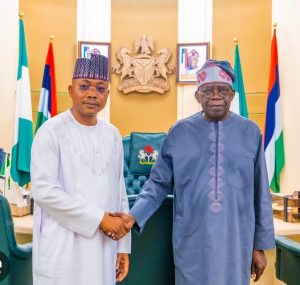
Written by Hon. Chief Emmanuel I. Obasi
Special Adviser to the Kogi State Governor on Federal Projects Implementation
INTRODUCTION
President Bola Ahmed Tinubu’s Independence Day Address of 1st October 2026 marks a clear transition in the economic direction of the Federal Government. The President stated that the emergency phase of economic reform had done its work, that the foundation had been repaired, and that the central economic task had now changed. According to him, the focus of the country now is *SHARED AND WIDESPREAD PROSPERITY.* He explained that prosperity should not be understood merely in terms of a larger economy or improved statistics, but in terms of a Nigeria where farmers can produce more at lower cost, factories have reliable power, businesses can obtain credit, young people can find productive work, food and transportation become more affordable, education is within reach, and hard-working families can look towards the future with greater confidence.
The President’s speech therefore provides a useful framework for examining what the transition from reform to prosperity means for Kogi State. One can reasonably say that Mr President was addressing the people of Kogi State in particular because virtually every major economic objective articulated in his address has a direct geographical, economic, infrastructural or institutional connection with the State.
Kogi sits at the intersection of major national transportation corridors, possesses extensive agricultural resources and 32 mineral deposits, hosts the enviable Ajaokuta Steel Complex and Itakpe iron-ore assets, has access to the River Niger and Benue, and is developing new aviation, commercial, technological and human-capital infrastructure. The State has three State-owned Universities and the Federal University, Lokoja, among numerous other middle and lower educational institutions. Its people are hardworking and resilient.
The significance of the President’s message for Kogi is consequently not simply that the State has enormous potential to support the national prosperity agenda. The more important issue is how the Federal Government, its Ministries, Departments and Agencies, working in strategic partnership with the administration of Governor Usman Ododo, can ensure that Federal infrastructure in Kogi is fully implemented to support production, while production generates employment, employment increases household income, and increased income improves the quality of life of ordinary Kogites.
Governor Ododo has positioned the State Government as a strategic partner through engagements with Federal Ministers, agencies and development institutions on roads, agriculture, industrialisation and economic infrastructure. His administration has also undertaken complementary State projects designed to ensure that Federal investments produce wider economic benefits. Recent engagements with the Federal Ministry of Works, for example, have focused on accelerating critical Federal roads in Kogi.
I have therefore studied and analysed the underlying imperatives of Mr President’s speech in relation to the implementation of Federal Government projects in Kogi State. I have also examined the speech through the specific economic and developmental circumstances of the State, using his own words as follows:
1. “LOWERING THE COST OF PRODUCING AND MOVING THE THINGS NIGERIANS CONSUME”: Mr. President’s declaration that Nigeria’s priority is to “bring down the cost of living” by lowering the cost of producing and moving the things Nigerians consume places transportation infrastructure at the heart of the prosperity agenda. For Kogi State, this means treating Federal roads not simply as civil-engineering projects but as economic infrastructure that determines the cost of agricultural production, manufacturing, commerce, passenger movement and distribution.
In the spirit of Mr. President’s cost-reduction objective, the Federal road network connecting Kogi to Abuja, the North, South-West, South-South and South-East must receive sustained attention. The Abuja–Lokoja–Benin corridor, Kabba–Egbe–Omuo–Ilorin Road and other strategic Federal routes should therefore be viewed as economic corridors whose completion will directly influence the cost of moving food, raw materials, industrial inputs and finished products.
Governor Usman Ododo’s administration has recognised this connection between roads and prosperity and has made strategic engagement with the Federal Ministry of Works a major component of its infrastructure strategy. In April 2026, the Kogi State Commissioner for Works engaged the Minister of Works specifically on the Lokoja–Okene, Ajaokuta, Itobe and other Federal roads, seeking stronger Federal–State collaboration to accelerate infrastructure delivery.
Mr. President’s call for lower production and transportation costs also makes the reprocurement of the terminated Okene–Ajaokuta–Itobe Road Dual Carriageway and the Lokoja–Shintaku–Dekina–Anyigba Road particularly important. The Lokoja–Shintaku Bridge across the River Niger is especially critical because its effective delivery would improve connectivity between agricultural communities, commercial centres and markets.
Governor Ododo’s strategic engagements should therefore continue to support the Federal Government’s reprocurement and completion process, while State road investments are deliberately connected to the Federal network. This reflects Mr. President’s broader vision: Federal and State roads should function as one economic transportation system capable of reducing travel time, vehicle operating costs, logistics expenses and ultimately the cost of goods.
The ongoing reconstruction of the Abuja–Lokoja–Okene–Benin Highway provides a concrete example of Mr. President’s infrastructure philosophy in Kogi. Governor Ododo has publicly commended the President’s intervention, noting that the corridor will improve the movement of people, goods and services, stimulate trade and investment, improve market access and open new economic opportunities.
2. “BUILDING AND COMPLETING THE ROADS, RAILWAYS AND PORTS THAT CONNECT FARMS AND FACTORIES TO MARKETS”: Mr. President’s call for roads, railways and ports that “connect farms and factories to markets” requires Kogi to think beyond individual infrastructure projects and develop an integrated transportation and logistics system. The President’s vision means that a road should connect to a farm, a farm should connect to an aggregation centre, an aggregation centre should connect to processing, and processing should connect efficiently to domestic and international markets.
For Kogi, this makes the Okene–Ajaokuta–Itobe Road strategically important to the industrial economy surrounding Ajaokuta and Itakpe. It also makes the Lokoja– Shintaku– Dekina– Anyigba corridor important as an agricultural and commercial artery serving farms, communities and markets across central and eastern Kogi. Their implementation should therefore be viewed through the specific lens of Mr. President’s farm-to-market and factory-to-market agenda.
Governor Ododo’s administration has consistently engaged the Federal Government on this wider connectivity objective. The State Government’s collaboration with the Federal Ministry of Works is designed not merely to improve individual roads but to strengthen Kogi’s position as a national transportation gateway. The Federal Works Minister himself described Kogi as strategically positioned between the northern and southern parts of the country during his June 2026 inspection of Federal projects.
Mr. President’s reference to railways and ports equally requires renewed attention to the Itakpe–Ajaokuta railway, its integration with the national rail network and the connectivity of the Lokoja River Port. The objective should be to create a seamless WATER–ROAD–RAIL LOGISTICS SYSTEM through which agricultural produce, minerals, industrial raw materials and finished products can move efficiently across Kogi and between Northern and Southern Nigeria.
Governor Ododo’s strategic engagements with Federal institutions should consequently continue to promote this intermodal approach. The economic value of the road network, the rail system and the River Port will be substantially enhanced if the three modes are planned and operated as complementary components of the same logistics architecture, precisely as contemplated by Mr. President’s infrastructure-to-market agenda.
3. “EXPANDING MECHANISED IRRIGATION AND DRY-SEASON FARMING”: Mr. President’s commitment to “expanding mechanised irrigation and dry-season farming”, alongside improved seeds, fertiliser and mechanisation, places agricultural infrastructure at the centre of Kogi’s contribution to national prosperity. The President’s objective is not simply to increase farming activity but to enable farmers to produce more, at lower cost and for longer periods.
In Kogi, this presidential objective should translate into greater Federal investment in irrigation schemes, mechanisation centres, farm access roads, aggregation facilities, storage, processing and agricultural logistics. Such investments should be concentrated around productive agricultural corridors and deliberately connected to the Federal road network so that increased production can reach markets.
Governor Ododo has already positioned agriculture as a major component of Kogi’s economic strategy. His administration has supported farmers with agricultural inputs and pursued partnerships involving IFAD, ACReSAL and L-PRES to strengthen agricultural production, livestock development, rural infrastructure and climate resilience. These State interventions provide an important complementary platform for implementing Mr. President’s agricultural prosperity agenda.
The next stage, consistent with Mr. President’s speech, is to ensure that Federal and State agricultural interventions operate as one production system. Mechanisation should increase cultivated acreage; irrigation should extend the production season; improved inputs should raise productivity; while storage and processing should reduce post-harvest losses.
Governor Ododo’s strategic role is therefore to continue aligning State agricultural programmes with Federal agricultural infrastructure and investment. The objective, in the language of Mr. President’s prosperity agenda, should be a Kogi where farmers produce more, earn better returns and supply both Nigerian cities and Nigerian industries.
4. “I WANT TO SEE MORE NIGERIANS MAKING THINGS”: Mr. President’s declaration, “I want to see more Nigerians making things,” gives particular importance to Kogi’s Ajaokuta–Itakpe industrial assets. The statement places manufacturing, processing, fabrication and value addition at the centre of the next phase of Nigeria’s economic development.
Governor Ododo has recognised this connection and has made the revival of Ajaokuta Steel and broader industrialisation a major component of his engagements with the Federal Government and development institutions. In April 2026, while engaging the North Central Development Commission, the Governor emphasised the importance of Ajaokuta Steel as a national industrial asset capable of supporting industrialisation, reducing construction costs and creating employment.
Mr. President’s manufacturing objective requires the Federal Government’s continuing work around Ajaokuta Steel and Itakpe iron ore to be connected to a wider downstream industrial ecosystem. This should include metal fabrication, engineering, machinery, agricultural equipment, construction materials, foundries, component manufacturing and other industries capable of converting raw materials into higher-value Nigerian products.
Mr. President’s “making things” agenda also directly supports the development of the Ajaokuta Economic City Free Trade Zone. The Zone received its NEPZA licence in February 2026, and Governor Ododo expressed appreciation to President Tinubu for approving its establishment while committing the State to developing it into an industrial and commercial ecosystem.
Governor Ododo’s engagement with NEPZA and other stakeholders should therefore be viewed as part of the practical implementation of Mr. President’s industrialisation objective. The immediate task is to move from licensing and institutional establishment to infrastructure, investors, factories, processing facilities, logistics, employment and production.
5. “WE WILL USE OUR GAS TO POWER NEW INDUSTRIES”: Mr. President’s commitment that “we will use our gas to power new industries” has direct implications for the development of Kogi’s industrial corridors. The President’s message recognises that industrialisation cannot occur without reliable and affordable energy. The Ajaokuta Gas and Industrial Hub readily comes to mind here. The Federal Government’s ongoing development of five Mini-LNG plants in Ajaokuta, alongside the 2026 gas-supply agreement for the Ajaokuta Steel Complex, provides a major foundation for transforming Ajaokuta into an integrated gas, energy and industrial hub.
For Kogi, this means that Ajaokuta, Itakpe and the Ajaokuta Economic City Free Trade Zone must be considered within an integrated energy and industrial infrastructure framework. Roads, railways, gas, electricity, water, telecommunications and industrial land must advance together if Mr. President’s industrial prosperity agenda is to be translated into actual factories and productive enterprises.
Governor Ododo’s industrial strategy has similarly identified infrastructure and connectivity as critical requirements for the Ajaokuta Economic City. His administration’s engagement around the Free Trade Zone provides a State-level platform for coordinating these requirements with Federal agencies and potential investors.
The Federal Government should therefore coordinate energy infrastructure with industrial development, while Governor Ododo’s administration continues to facilitate the State-level requirements necessary to attract investors and remove local implementation bottlenecks. This would give practical meaning to Mr. President’s objective of using energy infrastructure to drive industrial production.
6. “WE WILL INVEST IN THE SKILLS EMPLOYERS DEMAND”: Mr. President’s declaration that “we will invest in the skills employers demand” means that infrastructure development in Kogi must produce not only physical assets but also skilled human beings capable of building, operating and maintaining them.
Roads, bridges, railways, energy systems, agricultural projects, mining operations, manufacturing plants, ICT infrastructure and construction projects all require engineers, technicians, artisans, welders, electricians, machine operators, surveyors and other skilled personnel. In 2024, Governor Ododo initiated the KOYESA programme in partnership with the Nigeria-Korea Friendship Institute, culminating in the training and empowerment of 250 youths from Kogi’s 21 LGAs.
Governor Ododo’s industrialisation agenda creates an opportunity to align Kogi’s human-capital development with these emerging needs. The Ajaokuta Economic City and the wider Ajaokuta–Itakpe industrial ecosystem should therefore be linked to technical training, apprenticeship, internship and certification programmes.
In direct response to Mr. President’s skills agenda, the Federal Government, Kogi State Government, contractors, investors and training institutions should incorporate structured skills-development programmes into major infrastructure and industrial projects. Governor Ododo’s administration can facilitate this through State institutions and partnerships, while Federal MDAs and private investors integrate practical training into their projects.
The objective is precisely what Mr. President described: young Kogites should not simply watch Federal projects being constructed; they should acquire the skills required to construct, operate, maintain and expand the infrastructure and industries those projects create.
7. “SUPPORT NIGERIAN BUSINESSES WITH THE INFRASTRUCTURE AND FINANCE THEY NEED TO GROW”: Mr. President’s call to support Nigerian businesses with infrastructure and finance requires Federal projects in Kogi to be implemented in ways that generate opportunities for local businesses. Roads, bridges, industrial projects and agricultural schemes create demand for transporters, suppliers, contractors, technicians, accommodation providers, caterers, security services and professional firms.
Governor Ododo’s administration should therefore continue to use its investment-promotion and business-engagement platforms to connect Kogi enterprises with the opportunities created by Federal and State investments. This is consistent with Mr. President’s objective of ensuring that economic growth is translated into opportunities for Nigerian businesses.
The Ajaokuta Economic City Free Trade Zone provides a particularly important platform for this agenda. Governor Ododo’s administration has promoted the Zone as an investment and industrial ecosystem, while the NEPZA licensing milestone provides an institutional foundation for further development.
Federal development-finance institutions should therefore be connected to viable businesses within and around the Zone, while Governor Ododo’s administration facilitates the State-level requirements relating to land, local infrastructure, investment promotion and coordination or guarantee commercial loans to thriving industrial concerns in the State.
The ultimate objective, consistent with Mr. President’s speech, is for Federal capital expenditure to generate a multiplier effect in Kogi by creating opportunities for local businesses, encouraging private investment and expanding enterprise.
8. “I WANT TO SEE MORE NIGERIAN FARMS FEEDING OUR CITIES AND SUPPLYING OUR FACTORIES”: Mr. President’s declaration that he wants “more Nigerian farms feeding our cities and supplying our factories” provides a direct framework for Kogi’s agricultural development. The State’s agricultural production should not end at the farm gate; it must be connected to markets, processing facilities and industries.
Governor Ododo’s administration has pursued this objective through agricultural input support and partnerships with development institutions, while also promoting programmes aimed at strengthening agricultural production and agro-processing. These State interventions provide a foundation upon which Federal agricultural infrastructure can build.
The Lokoja– Shintaku– Dekina– Anyigba corridor is particularly relevant to Mr. President’s farm-to-market objective. Once reprocured and properly executed, it should function not merely as a road but as an agricultural and commercial corridor connecting farming communities to aggregation centres, processing facilities, markets and consumers.
Governor Ododo’s complementary interventions in rural roads, security, agricultural support and local infrastructure should has been deliberately aligned with Federal road and agricultural projects. This is how Mr. President’s vision of Nigerian farms supplying Nigerian cities and factories can become even a more practical reality in Kogi.
9. “I WANT TO SEE NIGERIAN BUSINESSES SELLING NIGERIAN GOODS TO THE WHOLE WORLD”: Mr. President’s ambition to see “Nigerian businesses selling Nigerian goods to the whole world” gives Kogi a significant export-development opportunity. The State’s geographical position, agricultural resources, mineral assets, industrial potential and transportation infrastructure can support an export-oriented economy.
The Ajaokuta Economic City Free Trade Zone is central to this objective. Governor Ododo’s administration has worked with NEPZA and other stakeholders to advance the Zone, which received its formal NEPZA licence in February 2026. The Governor described the Zone as a project that Kogi would develop into a model industrial and commercial ecosystem.
Mr. President’s export objective means that the Zone cannot stop at licensing. It must progress to physical infrastructure, investors, factories, processing plants, logistics operators, warehousing and export-oriented businesses.
While Governor Ododo’s has continued to strategically focus on creating the State-level conditions for investment he has at the same time continued to engage the Federal Government and its agencies to ensure that roads, rail, the Lokoja River Port, customs, standards, power and other national infrastructure converge around the export ecosystem.
Kogi’s agricultural, mineral and manufactured products should ultimately be able to move efficiently from production centres to Nigerian markets and onward to international markets, giving practical expression to Mr. President’s export vision.
10. “WE ARE PLACING JOBS, ENTERPRISE, AND INDUSTRIAL GROWTH AT THE HEART OF OUR GOVERNMENT’S POLICIES”: Mr. President’s statement that “jobs, enterprise, and industrial growth” are at the heart of Government policy establishes the ultimate test for infrastructure delivery in Kogi. The value of a road is measured not only by kilometres completed but by the economic activity it enables; the value of an industrial project is measured by production, investment and jobs; and the value of an agricultural intervention is measured by increased output and incomes.
Governor Ododo’s administration has adopted a complementary approach through investments and interventions in roads, agriculture, markets, aviation and industrial development. The State Executive Council’s September 2026 review of the Abuja– Lokoja– Okene– 1Benin Highway, for example, linked the project directly to movement of goods and people, trade, investment, market access and new economic opportunities.
Mr. President’s employment and enterprise agenda also requires urgent attention to the Federal Secretariat Complex in Lokoja. The project should be brought to sustained construction momentum because its completion would strengthen Federal Government operations in Kogi State, provide functional office accommodation and generate additional economic activity.
Governor Ododo’s administration has continued strategic engagement with the Federal authorities on the Secretariat Complex and other stalled or slow-moving Federal projects, while facilitating State-level requirements within its jurisdiction.
The wider principle is exactly what Mr. President articulated: infrastructure must produce economic opportunity. A road should open farms and businesses; a bridge should eliminate a bottleneck; an industrial project should create manufacturing; an agricultural programme should increase production; and a skills programme should improve employability while a Federal Secretariat Complex should produce efficient, effective and speedy service delivery.
11. “THE AGE OF REFORM HAS DONE ITS WORK. NOW BEGINS THE AGE OF PROSPERITY: Mr. President’s declaration that “the age of reform has done its work. Now begins the age of prosperity” provides the overarching framework for Federal Projects Implementation in Kogi State. The new challenge is to transform reforms and investments into physical infrastructure, production, jobs, enterprise and improved living standards.
In practical terms, this means that delayed, terminated or underperforming projects must not remain unresolved. They must be re-procured, recovered, completed and put into productive use. This is particularly important for the Okene–Ajaokuta–Itobe Road and the Lokoja–Shintaku–Dekina–Anyigba Road, whose completion is fundamental to Mr. President’s objective of reducing the cost of moving goods and connecting production to markets.
Mr. President’s prosperity agenda also requires continued attention to the Abuja–Lokoja–Koton Karfe corridor and the wider Abuja–Lokoja–Okene–Benin Highway. Governor Ododo has publicly recognised the importance of President Tinubu’s intervention and has linked completion of the corridor to improved connectivity, movement of goods, trade, investment and market access.
Mr. President’s industrialisation objective requires the effective development of the Ajaokuta–Itakpe industrial ecosystem. Governor Ododo’s continued advocacy for Ajaokuta Steel and his engagement with Federal and development institutions should therefore remain focused on moving the industrial assets from potential to production, manufacturing, employment and value addition.
Mr. President’s infrastructure-to-market agenda equally requires the development of the Lokoja River Port and the integration of road, rail and water transportation. Governor Ododo’s strategic engagement with Federal agencies should continue to support this integrated logistics approach so that Kogi can serve as a national distribution and production hub.
Mr. President’s agricultural prosperity agenda requires Federal irrigation, mechanisation, storage, processing and agricultural infrastructure to be aligned with Governor Ododo’s State agricultural programmes and development partnerships. This would ensure that increased agricultural production is matched by roads, markets, processing and logistics.
Mr. President’s commitment to skills and employment requires Federal contractors, industries and development institutions to engage Kogi’s young people through apprenticeships, technical training, internships and certification. Governor Ododo’s administration can provide the State-level institutional platform for such programmes while Federal agencies and private investors provide the project-based opportunities.
Mr. President’s call for stronger Nigerianl businesses requires Federal projects to create opportunities for Kogi contractors, suppliers, MSMEs and service providers. Governor Ododo’s investment-promotion efforts should therefore complement Federal financing and infrastructure by ensuring that local enterprises are positioned to participate in the economic activity generated by major projects.
Mr. President’s export ambition requires the Ajaokuta Economic City Free Trade Zone to move from institutional establishment to physical infrastructure, investment and production. Governor Ododo’s administration has already secured an important milestone through the NEPZA licence and should continue its strategic engagement with the Federal Government, NEPZA, investors and other stakeholders to advance the Zone.
Mr. President’s overall prosperity vision therefore requires a coordinated implementation architecture in Kogi involving the Federal Government, Governor Ododo’s administration, Federal MDAs, development institutions, contractors, investors and communities. Each level has a distinct responsibility, but the objective must be shared: infrastructure that produces economic value and prosperity.
IMMEDIATE KOGI FEDERAL PROJECTS IMPLEMENTATION AGENDA
Consistent with Mr. President’s “from reforms to prosperity” message, the immediate implementation priorities for Kogi State should include:
1. Reprocurement and completion of the Okene–Ajaokuta–Itobe Road Dual Carriageway, consistent with the President’s objective of reducing the cost of moving goods and people.
2. Reprocurement and completion of the Lokoja–Shintaku–Dekina–Anyigba Road, including the Lokoja–Shintaku Bridge, consistent with the President’s farm-to-market and market-connectivity agenda.
3. Reprocurement and completion of the Lokoja–Shintaku–Dekina–Anyigba Road, including the Lokoja–Shintaku Bridge, consistent with the President’s farm-to-market and market-connectivity agenda.
4. Sustained completion and maintenance of the Abuja–Lokoja–Okene–Benin Highway, reflecting the President’s emphasis on infrastructure that reduces transportation costs and expands economic opportunities. Governor Ododo has already recognised the project as strategically important to Kogi and the national economy.
5. Acceleration of the Federal Secretariat Complex in Lokoja, consistent with the President’s emphasis on efficient institutions, jobs and productive economic activity.
6. Development of the Ajaokuta–Itakpe industrial ecosystem, reflecting Mr. President’s call for Nigerians to make more things in Nigeria.
7. Operationalisation of the Ajaokuta Economic City Free Trade Zone, building upon the NEPZA licence secured under Governor Ododo’s administration and translating the President’s industrial and export vision into factories, investments and jobs.
8. Integration of the Lokoja River Port with road and rail infrastructure, reflecting the President’s call for roads, railways and ports that connect farms and factories to markets.
9. Expansion of mechanised agriculture, irrigation, storage and agro-processing, reflecting the President’s commitment to increasing agricultural productivity and connecting farms to cities and industries.
10. Development of technical skills around Federal projects and emerging industries, reflecting the President’s commitment to investing in the skills employers demand.
11. Greater participation of Kogi MSMEs in Federal projects and industrial value chains, reflecting the President’s call to support Nigerian businesses with infrastructure and finance.
12. Integration of Federal and State infrastructure planning, ensuring that Governor Ododo’s State Projects interventions reinforce rather than operate separately from Federal projects.
CONCLUSION
Mr. President’s 2026 Independence Day Address provides Kogi State with a clear development framework: reduce the cost of production and transportation; connect farms and factories to markets; expand agriculture; manufacture more in Nigeria; provide reliable energy; develop the skills employers need; support Nigerian businesses; create jobs; and expand exports.
Governor Ahmed Usman Ododo, FCA, as a responsible leader has continued providing strategic State-level leadership, complementary infrastructure, investment facilitation and sustained engagement with the Federal Government and its agencies. His administration’s respective engagements with relevant Federal MDAs on Federal roads, agriculture, Ajaokuta industrial development and the Economic City demonstrate the importance of Federal–State cooperation in translating national policy into State-level economic outcomes. And this writer believe that he will not relent.
The Federal Government, for its part, should maintain momentum on Federal projects, provide appropriate funding, enforce quality and workable timelines, reprocure terminated projects expeditiously, resolve implementation bottlenecks and ensure that completed infrastructure is functional and maintained.
The ultimate measure of Mr. President’s “age of prosperity” in Kogi will therefore not simply be the number of projects awarded or the kilometres of roads under construction. It will be the number of projects or kilometers of roads timeously completed that must create opportunities for Kogi businesses and young people.
In this way, Mr. President’s transition “from reform to prosperity” can acquire a concrete Kogi expression: Federal infrastructure supporting production; production creating jobs; jobs increasing incomes; incomes improving living standards; and infrastructure, enterprise and human capital combining to build a more prosperous Kogi State.
That is the practical implementation of Mr. President’s 2026 Independence Day message in Kogi State.
End