
 By joshua
 2027: KOGI’S POLITICAL HISTORY CANNOT BE ERASED BY A TWO-DAY SUMMIT
By Musa Bakare
The proposed Kogi Power Rotation Summit, with the theme “Retooling Kogi for Unity and Shared Prosperity,” presents itself as an avenue for dialogue about leadership, inclusion, equity and the future of Kogi.
Those are noble words.
But noble words must be tested against political reality.
The critical question, therefore, is this: if governorship rotation has long been a matter of political understanding and expectation among senatorial districts of Kogi State, why should the state now be taken back to another seminar to debate whether a principle of equitable rotation should exist at all?
There is a difference between discussing how to implement fairness and organising a conference that potentially reopens the question of whether fairness should apply.
Political agreements in Nigeria have frequently existed as conventions, understandings, bargains, zoning arrangements and gentlemen’s agreements.
In a plural society like Kogi State, political stability often depends on conventions through which different communities assure one another: Your turn will come.
Since 1960, political zoning and rotation have repeatedly been used in Nigeria as mechanisms for managing diversity and reducing the fear of permanent domination by one section of a heterogeneous society.
Kogi State was created on 27 August 1991 from parts of the former Kwara and Benue States.
The state itself describes its creation as bringing together communities with a shared history; the old Kabba Province of the defunct Northern Region of Nigeria that had previously been separated administratively.
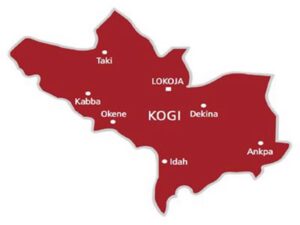
Kogi State now has three senatorial districts, Kogi West, Kogi Central and Kogi East and comprises 21 local government areas.
The civilian governors that have governed the state include Abubakar Audu, Ibrahim Idris, Idris Wada, Yahaya Bello and, since January 2024, Usman Ododo.
The political fact that demands serious discussion is this: Kogi West has not produced an elected governor of Kogi State since the state was created in 1991.
Since the return to democratic government in 1999, the succession of elected governors has continued outside Kogi West.
Therefore, when people from Kogi West say, It is our turn, they are not merely making an emotional demand.
They are making a political argument based on the historical distribution of the highest elected office in the state.
The argument is fundamentally this: every component of Kogi State deserves a credible and realistic opportunity to occupy the highest elective office of the state.
That is the essence of inclusion. That is the essence of equity. That is the essence of political accommodation.
And that is how a diverse society prevents political competition from becoming a permanent struggle for survival.
This is where the proposed seminar deserves serious scrutiny.
Suppose one part of the state says, We have never produced the governor, and another responds: Let us organise a seminar, The seminar produces another seminar. The second seminar produces another committee.
The committee recommends further consultation. The consultation recommends another political dialogue.
Is the proposed seminar not then being simply a planned political postponement wearing academic clothing?
Kogi people must therefore distinguish between dialogue that resolves a problem and dialogue that indefinitely postpones its resolution.
The proposed summit speaks correctly about unity. But unity cannot mean that one community should continuously be asked to sacrifice its legitimate aspiration to leadership for the sake of everybody else’s comfort.
If Kogi West is told that rotation is important when other communities are seeking power, but unnecessary when Kogi West’s turn arrives, then the principle itself becomes meaningless.
There is an important distinction here.
Rotation means exactly what the word says: movement.
As the 2027 election cycle approaches, a seminar of whatever kind is an abstract philosophical discussion. If Kogi West has never produced an elected governor since the creation of the state, then the demand that 2027 should represent a serious opportunity for Kogi West deserves to be treated as a substantive political claim, not reduced to any form of talkshop.
A summit must not become an instrument for manufacturing new political uncertainty where a longstanding expectation already exists.
Kogi does not need a seminar to discover that Kogi West exists.
Kogi does not need a summit to discover that Kogi West should produce the next governor.
Kogi does not need a seminar to discover that political power has not rotated equitably across the three senatorial districts.
Let the state establish a culture in which no district feels permanently excluded from the highest elective office.
For 2027, therefore, the political conversation should be this:
Kogi West deserves a genuine opportunity to produce the next governor, because equity requires movement.
Kogi State must not confuse dialogue with delay.
It must not confuse consultation with cancellation.
It must not confuse unity with uniformity.
And it must not confuse democracy with perpetual political subjugation.
It requires every senatorial district to believe that its own turn can come.
That belief is the foundation of political trust.
As Kogi approaches 2027, the call from Kogi West should be understood in its proper historical and political context:
We are asking for our legitimate opportunity to produce the governor of Kogi State.
Musa Asiru Bakare
Political Analyst and commentator,
Lokoja – Kogi State
September 28, 2026