
 By joshua
 Beyond the Ballot: The Kind of Senator Kogi East Truly Needs
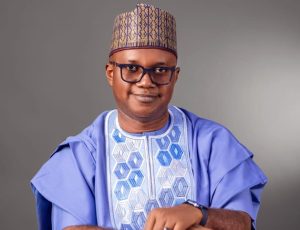
By Christopher Sunday
There is a philosophical difference between occupying a position and carrying a responsibility. A position gives a person a title; responsibility gives that title meaning. In the life of a people, leadership is not measured by how high a man rises above them, but by how deeply he remains connected to the realities of those who entrusted him with power. This is why every election is more than the casting of ballots. It is a moment when a people decide not only who should represent them, but what kind of representation they are willing to accept.
For Kogi East, the 2027 senatorial election presents precisely that moment of reflection. Beyond the familiar language of campaigns, endorsements and political calculations lies a more important conversation about the quality of representation the people deserve. Who should speak for them in Abuja? Who understands the difference between legislation and executive responsibility? Who possesses the professional discipline to interrogate public expenditure, the humility to listen to ordinary people and the courage to pursue their interests beyond the excitement of an election season? These questions are important because a Senate seat is not a trophy to be won and displayed. It is a public trust to be carried.
It is within this larger conversation that the candidacy of QS Aminu Abubakar Suleiman deserves to be examined. QS Aminu is coming into the contest not simply as another politician seeking a seat, but as a professional whose career has been built around the principles of measurement, planning, accountability and delivery. As a Quantity Surveyor and construction project management expert, he understands that every serious project begins with a plan, that resources must be properly managed and that somebody must ultimately take responsibility for the outcome. Those principles may have been developed in the professional world, but they are equally relevant to public service, where the resources being managed belong not to the government but to the people.
Perhaps this is one of the reasons his political proposition deserves a different kind of attention. Nigeria does not only suffer from a shortage of ideas; it often suffers from the failure to translate ideas into measurable outcomes. We announce projects without asking enough questions about value, sustainability and impact. We approve budgets without always following the journey of the resources to their final destination. We make promises to communities without establishing clear mechanisms for accountability. A representative with a professional understanding of projects, costs, planning and delivery has an important role to play in asking those difficult questions. The Senate needs people who understand that development is not achieved by announcing a project, but by ensuring that public investment produces public value.
This becomes even more significant when viewed through the realities of Kogi East. The farmer who struggles to move produce from a rural community to the market does not experience development as an abstract policy debate. The young graduate who has finished school but cannot find a meaningful opportunity does not see unemployment as a statistic. The family that spends evenings without reliable electricity does not understand energy policy as a technical document. For the woman trying to sustain a small business, access to finance, markets and infrastructure is not a campaign slogan; it is the difference between survival and progress. These are the people whose experiences must eventually find a voice in the National Assembly.
QS Aminu’s emphasis on purposeful representation, strategic legislation and sustainable development speaks directly to this reality. Purposeful representation means understanding that the relationship between a senator and his constituents should not begin and end at the ballot box. Strategic legislation means recognising that the Senate is fundamentally a lawmaking and oversight institution, where the quality of legislation, scrutiny of government agencies and participation in national policy can have consequences far beyond the walls of the chamber. Sustainable development means thinking beyond what can be achieved for political visibility today and asking what can remain useful to the people tomorrow.
But perhaps there is another dimension to QS Aminu’s candidacy that cannot be captured by professional credentials or policy language alone: the human dimension. Politics is ultimately about people, and leadership is often revealed not in the grand speeches delivered before crowds but in the quiet moments when there is no political advantage to be gained. His recent engagements with traditional rulers, community leaders and families in moments of grief have provided glimpses of a political personality that places human relationships ahead of political theatre. His respect for traditional authority and his willingness to listen are not insignificant qualities in a society where people often want their leaders to remember that public office does not make them greater than the people they serve.
That humility is important because competence without humanity can become technocracy, while humanity without competence can become sentiment. Effective leadership requires both. Kogi East needs a senator who can understand the technical dimensions of development while still remembering the human beings behind every statistic, budget line and policy decision. The farmer is not a figure in an agricultural report. The unemployed young person is somebody’s child. The rural community without electricity is not merely a constituency map. Behind every development challenge is a human story, and behind every political mandate is a human expectation.
This is where the idea of Humanity First assumes a deeper meaning in QS Aminu’s political message. It is not simply about being compassionate or accessible; it is about recognising the moral foundation of public service. If political power is ultimately derived from the people, then the first duty of the person who receives that power is to remember the people. The senator is not the owner of the mandate. He is its custodian.
That understanding should shape the expectations of voters as the 2027 election approaches. Kogi East should ask candidates not only what they intend to build, but what they intend to legislate. Not only how many people they intend to empower, but what policies they will pursue to create sustainable opportunities. Not only how often they will appear before the people during campaigns, but how often they intend to return to listen after the election. And beyond all of these, the people should ask the most uncomfortable question in democratic politics: when your tenure ends, what will you have done with the trust we gave you?
These are the questions that can elevate the Kogi East senatorial contest beyond the ordinary theatre of Nigerian politics. They shift the conversation from personality to purpose, from promises to responsibility and from the pursuit of office to the meaning of service. They also provide the proper context within which QS Aminu’s candidacy should be judged—not by the volume of his campaign, but by the seriousness of the ideas behind it; not merely by his ability to win an election, but by his capacity to make the mandate meaningful.
In the final analysis, the 2027 election will produce only one senator for Kogi East, but the decision will say something much larger about the people themselves. It will reveal what they consider important in leadership, what they are prepared to demand from their representatives and what standard they are willing to establish for the future. QS Aminu is offering himself within that conversation as a professional, a listener and a man who believes that representation should have purpose and that politics should ultimately return to the people.
The ballot will decide who occupies the Senate seat. But the people must decide what they want that seat to mean.
Because in the end, leadership is not the privilege of standing before the people.
It is the responsibility of standing for them.