
 By joshua
 SENATOR KARIMI SUNDAY STEVE: A SCORE CARD OF CONSISTENT QUALITY REPRESENTATION — PART 3
By Abu Micheal
‘ROOTED IN THE GRASSROOTS, DELIVERING FOR THE FUTURE’
When you speak to constituents across Kogi West today, the conversation about Senator Sunday Steve Karimi rarely starts with politics. It starts with water. It starts with light. It starts with a child who got a bursary, a woman whose cooperative got capital, or a market that was rebuilt. That is the measure he has chosen for himself, and it is the reason why, three years into his Senate tenure, the conversation in the seven local governments is no longer about promises. It is about proof.
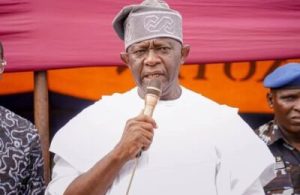
Born in Egbe, and trained as an Engineer, Senator Karimi came into public service with a simple conviction: that government must be felt where people live. From the House of Representatives between 2011 and 2019, to the Senate since 2023, he has tried to keep that conviction intact. As the first man from Yagba to enter the Senate since 1999, he understood the symbolism. But he also understood the responsibility. Yagba, Kabba-Bunu, Ijumu, Lokoja, Kogi, Yagba East and Mopa-Amuro all had different needs, and he set out to meet them without playing favorites.
One area that has quietly grown under his watch is agriculture and small business support. He recognizes that Kogi West is agrarian. From the yam and cassava farms of Ijumu to the rice and maize fields of Lokoja and Kogi LGAs, farmers needed more than speeches. They needed inputs, storage, and access to markets.
Through his office, farmers have received support in the form of seedlings, fertilizers and processing equipment. But the bigger intervention has been financial. The Yagba People Empowerment Initiative, which he launched in 2014 with N34 million of personal funds and about N100 million raised from stakeholders, created a template that has now been replicated across the senatorial district. The model is simple: identify real business owners, train them, and give them capital on a revolving basis.
In 2024, that model was scaled through his wife’s program for women. *50 women cooperatives received N2 million each*. The money is disbursed to members in turns, so one woman can buy stock, pay it back, and the next woman takes her turn. It is not charity. It is structured capital. Beneficiaries in Kabba, Egbe, Isanlu and Iyara say it has helped them expand petty trading, food processing and tailoring without falling into loan sharks.
For youth, the empowerment has been direct and practical. Motorcycles for commercial riders, tricycles for transport, grinding machines for women, sewing machines for tailors, generators for welders and block-moulding machines for builders. In 2016 alone, 150 motorcycles, 20 tricycles, 50 sewing machines, 20 generators and 75 pepper-grinding machines were distributed across the 34 wards that made up the old federal constituency. That same philosophy now runs across all seven LGAs of Kogi West. The goal is not to create dependency. It is to create owners.
Though quietly. In Lokoja II, a cottage clinic was constructed in Kakanda to serve riverine communities that previously traveled long distances for basic care. The clinic is equipped and staffed, and it is part of a broader push to bring primary health closer to the people.
During emergencies, his office has responded. When the Egbe boat mishap occurred, he made a substantial donation to support victims and their families. During annual township days in Egbe, Isanlu, Iyamoye and other towns, he has made donations to support community projects, from town halls to health centers. These are not captured in federal budgets, but they matter deeply to communities that see them as signs that their Senator is present.
Infrastructure is about more than buildings. It is about movement. The Pakuta Bridge project is one of the most talked-about interventions in the district right now. For years, residents of Ijumu, Bunu and parts of Lokoja struggled with access during the rainy season. Farm produce would rot because trucks could not cross. The bridge, when completed, will cut travel time, reduce costs, and open up new trade routes. It is a project constituents say will outlive this administration.
He has also been vocal in the Senate about federal roads. He moved motions on the deplorable state of the Obajana-Kabba-Isanlu-Egbe-Omu Aran road, and on the need for a dedicated road fund to ensure continuity in road projects. His argument is simple: without good roads, no other development can thrive.
The bursary scheme remains one of the most popular programs. In 2024, 1,000 students from Kogi West received N100,000 each. The selection was done across wards, with an emphasis on indigent students in public institutions. The program was so well received that, in partnership with the Tinubu Support Group, it was expanded to 3,000 students across Kogi State with N300 million disbursed.
But he has also invested in the institutions themselves. The Federal University of Agriculture, Kabba and the Federal University of Medicine and Medical Sciences, Egbe bills are about creating permanent centers of learning and research in Kogi West. If passed, they will bring lecturers, students, and ancillary businesses into Kabba and Egbe, changing the economic landscape of both towns.
The rehabilitation of Government Science Secondary School, Kotonkarfe is another long-term play. At over N2.5 billion, it is being transformed into a model science school that can compete nationally. New classroom blocks in St. Barnabas Kabba, Odo-Ape, Iluke-Bunu and Igbaruku are already in use. The National Open University Study Centre* will give working adults a chance to get degrees without leaving the district.
Security remains central. The Army Forward Operating Base in Egbe* was not just about Kogi West. It was about the entire North Central corridor. By siting it at the Kwara-Kogi border, Senator Karimi ensured that response time to kidnapping and armed robbery dropped. The base has 85 beds, living quarters, an armory, and independent solar and generator power. Security agencies operating in the area have confirmed that patrols are now more frequent and communities feel safer.
In the Senate, he has used his voice to speak on national unity. One of his early motions was on the urgent need to prioritize nation building and national unity in the 10th Assembly. He has also spoken on oil theft, refinery maintenance, and the need to protect public resources. His colleagues describe him as a lawmaker who reads his briefs and speaks with data.
Across Kogi West, political leaders are already drawing conclusions. The reason is simple: the Senator has managed to do what many before him struggled with, which is to spread projects evenly. A borehole in Lokoja Ward A, a transformer in Iyah-Gbede, street lights in Egbeda, a classroom in Odo-Ape, a bursary for a student in Mopa. No LGA feels left out.
That balance is political gold. Labor leaders, traditional rulers, women leaders and youth groups have all publicly endorsed his approach. They say that in an economy where people are struggling, a representative who delivers water, light, and school fees is worth keeping.
Senator Karimi himself has been careful not to make it about himself alone. He consistently ties his work to President Bola Ahmed Tinubu’s Renewed Hope Agenda. The rice distribution during Christmas, Ramadan and Sallah that now covers all three senatorial districts is done in the President’s name. The bursary expansion is also branded under Renewed Hope. It is a deliberate alignment that has strengthened the APC in Kogi West.
In Kabba, a market woman who received a grinding machine says she now pays her children’s school fees without borrowing. In Egbe, a youth leader says the FOB has made night travel possible again. In Lokoja, a student who got the N100,000 bursary says it paid his final year fees. In Ijumu, a farmer says the Pakuta Bridge will finally allow him to take his yams to Lokoja market before they spoil.
These are not statistics. They are stories. And they are the reason why the refrain “equal opportunity” has stuck.
Senator Karimi is not done. The National Open University Centre is ongoing. More boreholes are being sunk. More transformers are being installed. The university bills are at various stages in the National Assembly. The bursary will run again next year. The cooperative fund will be disbursed again.
He has also promised to focus more on ICT and skills. With the world moving toward digital jobs, he believes Kogi West youth must be trained in tech, welding, carpentry and other trades that pay. Plans are underway to partner with federal agencies to bring skills acquisition centers to the district.
Twelve years after he first entered the House of Representatives, and two years into his Senate term, the record of Senator Sunday Steve Karimi is being written in concrete, in water, in light, and in opportunity.
He promised equal opportunity quality representation. He has tried to deliver it ward by ward. From rehabilitating a borehole in Ponyan to building an Army base in Egbe, from paying school fees in Lokoja to lighting streets in Mopa, the pattern is the same: show up, deliver, and supervise.
Kogi West is watching. And as the years go by, the verdict is becoming clearer. For many, Senator Karimi has not just represented them. He has redefined what representation should look like.
That is the scorecard. And it is still being written.