
 By joshua
 Ododo’s Labor-Friendly Approach to Governance: Improved LG Salaries, Improved Workers Welfare and the Onu Edoka Factor
By Husseini Abubakar
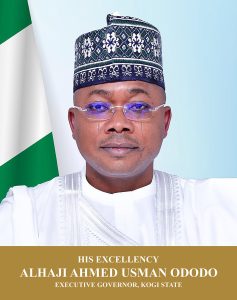
Since assuming office, Governor Ahmed Usman Ododo of Kogi State has redefined governance at the grassroots through a deliberate, people-centered approach to Local Government administration. His philosophy is simple: Seeing strong local governments as the engine room of development, and a motivated workforce as the fuel that drives that engine. This twin focus has set a new tone for governance in Kogi State.
The Ododo administration has chosen partnership over conflict. The Governor views Local Government Chairmen, Councilors, and workers not as subordinates, but as critical stakeholders in the delivery of the “Renewed Hope Agenda” at the community level. This posture has restored confidence and a sense of belonging across the 21 LGAs.
Central to this transformation is the Governor’s commitment to improved welfare for Local Government workers. For years, salary delays and poor remuneration eroded morale at the grassroots. Thus, Governor Ododo moved swiftly to address this by prioritizing the payment of improved salaries and ensuring regularity, thereby restoring dignity to the Council workforce.
The impact of the improved salary structure has been immediate and visible. Teachers, health workers, clerks, and other council staff now approach their duties with renewed energy, knowing that their labor is valued. In markets, classrooms, and primary health centers across Kogi, productivity has received a noticeable boost because workers are no longer demoralized.
This progress did not happen by accident. It is the direct result of strategic engagement and constant dialogue between Government and Labor. At the heart of this bridge-building is the Special Adviser to the Governor on Labor Matters, Comrade Onuh Edoka, whose role has been pivotal in sustaining industrial harmony.
Comrade Onu Edoka, a tested labor leader himself, understands the language of both Government and workers. As Special Adviser, he has functioned as more than a liaison. He is a negotiator, an advocate, and a trusted voice who ensures that workers’ concerns are tabled early and addressed with sincerity before they escalate.
Through Comrade Edoka’s intervention, several potential flashpoints have been diffused. His open-door approach to the NLC, TUC, and JNC leaderships has created a culture where grievances are discussed around the table, not on the streets. This proactive engagement is a major reason why Kogi has enjoyed relative peace in the labor sector under Governor Ododo.
The improved salaries of Local Government workers stand as the clearest evidence of this healthy collaboration. The negotiations were not combative. They were frank, data-driven, and solution-oriented, with Comrade Edoka ensuring that the Government understood the economic realities of workers, while also helping labor appreciate the state’s fiscal responsibilities.
It is explicitly clear that the Ododo administration’s support for labor extends beyond the payslip. In a landmark gesture of goodwill and recognition, the Governor recently donated brand new buses to the state chapters of the Nigeria Labor Congress, NLC, the Trade Union Congress, TUC, and the Joint Negotiation Council, JNC.
The donation of the buses was more than logistics. It was a statement as it signaled that the Government sees labor unions as genuine partners in development, not as adversaries. For union leaders and members who travel across the state for meetings, advocacy, and mobilization, the buses will undoubtedly ease movement and strengthen their capacity to serve workers better.
Labour leaders in the state have publicly acknowledged the gesture as unprecedented. They noted that such support strengthens the union’s ability to organize, educate members, and participate fully in governance. It is this kind of mutual respect that defines the Ododo model of labour-government relations.
At the Local Government level, this harmony is translating into results. With regular salaries and improved morale, Council workers are now more responsive to community needs. Primary healthcare delivery, sanitation, rural road maintenance, and education supervision are all receiving greater attention because the people implementing them are no longer on strike or agitated.
The partnership model championed by Comrade Onu Edoka and embraced by Governor Ododo offers a template for other states. It proves that Government and Labour can work together without bitterness. When workers are paid well, carried along, and respected, they become the strongest allies of government in delivering service to the people.
It is also pertinent to commend the Governor for sustaining the regular payment of pensions and gratuities to retirees. However, the Governor should also prioritize lump-sum payments to clear the backlog of gratuity arrears for State and Local Government pensioners inherited over the years, which has not received adequate attention.
Furthermore, outstanding promotions and other critical welfare issues affecting workers should be promptly addressed to enhance their morale and further strengthen the cordial relationship between Government and Labour.
In conclusion, Governor Ahmed Usman Ododo has demonstrated that good Local Government administration and good Labour relations go hand in hand. Through improved salaries, strategic appointments like that of Comrade Onuh Edoka, and tangible support such as the donation of buses to NLC, TUC, and JNC, his administration has built trust. The result is a more productive workforce, stronger local governments, and a Kogi State that is moving forward together.