
 By joshua
 KOGI GOVERNMENT: LAST TEN YEARS UNDER MY SPECTACLES (PART TWO)
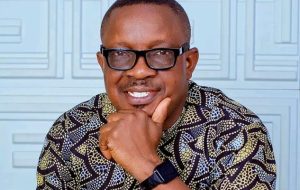
By Pastor Stanley Ajileye
I just read an enquiry from one Ekun Dayo Omole asking why someone who supported Governor Ahmed Usman Ododo in 2023 would now say he should not seek a second term.
The answer to Omole’s question is astonishingly simple.
Performance.
Politics is not a traditional marriage where one says, “I do,” and then discovers that criticism has become adultery.
Democracy is a renewable contract.
Citizens are shareholders, not hostages. Supporting a candidate yesterday does not require one to become permanently allergic to facts tomorrow.
Where government performs well, we applaud.
Where it performs poorly, we complain.
That is citizenship. Anything beyond that begins to resemble membership of an official fan club, complete with uniforms, praise songs, and compulsory standing ovations.
I have publicly praised Governor Ododo’s humility.
Humility is a virtue.
Governor Ododo appears more approachable than his predecessor.
I have also acknowledged the administration’s investment in strengthening security.
He is doing much at undoing the burden of insecurity he and his uncle, brought upon our state to please the former president.
Good is good.
There is no tax on giving credit.
But applauding one achievement does not require me to surrender my common sense.
Apparently, some government defenders believe that once you clap for one project, your hands become permanently unavailable for asking questions.
Sorry. The Constitution says otherwise.
So Omole’s question creates a far more important question.
What exactly has Governor Ododo done to deserve another four years?
That, not political genealogy, is the issue.
Performance is a stubborn thing.
It refuses to obey press releases.
A pothole does not disappear because somebody called it “world-class infrastructure.”
An unpaid pension does not become settled because it was announced during a colourful ceremony with enough banners to decorate a football stadium.
No amount of official photography can convince a commercial driver that a damaged road is actually smooth.
His shock absorbers know the truth.
His mechanic knows the truth.
Even his passengers know the truth.
Government can organise commissioning ceremonies every week, like they are planning to do again with the repainting of the old streetlights in Lokoja so that they can be recommissioned as new projects. But ribbon-cutting has never repaired a road.
Scissors are not construction equipment.
If tomorrow Governor Ododo transforms Kogi into Dubai, I will happily congratulate him.
In fact, I may even buy the microphone myself.
But until then, citizens are entitled to ask whether public money is producing public value or merely producing public relations.
And please, nobody should tell us that salaries are being paid.
Paying salaries is not an Olympic event deserving a gold medal.
It is the government’s job.
If a pilot lands an aircraft safely, passengers clap because survival is exciting.
But if a government pays salaries, it has simply remembered the reason government exists.
If a landlord collects rent and hands you the key to your own apartment, nobody organises a praise night.
The same principle applies.
The real questions remain:
What measurable improvement has occurred in the lives of ordinary Kogi citizens?
How are available resources being utilised?
How much is going into governance, and how much into governing the headlines?
If inherited salary balances remain outstanding from the Yahaya Bello era, let the government publish the figures.
Government records are not classified military secrets.
Publish what was inherited.
Publish what has been paid.
Publish what remains.
Transparency is cheaper than propaganda.
Governor Ododo served as Auditor-General for Local Government during that period.
I am not suggesting he personally created those liabilities.
I am simply saying history cannot suddenly develop amnesia because elections have been won.
Government is a relay race.
When you collect the baton, you inherit both the applause and the unfinished laps.
The pension and gratuity situation deserves equal transparency.
Publish the numbers.
Tell us how much has been paid.
Tell us how many retirees remain unpaid.
Tell us the criteria.
Because once pensioners begin to believe that collecting their gratuity requires knowing somebody who knows somebody who knows somebody, confidence evaporates.
Government should answer allegations with documents, not with insults.
Documents age beautifully.
Insults expire before breakfast.
Now to roads.
Take the road on the Zango-Zone 8 axis in Lokoja, built about a year ago. It is now almost impassable.
One begins to wonder why all the roads to and in Okene remain solid after more than six years despite heavier traffic, while those in other areas of the state deteriorate almost as soon as they are commissioned.
Some roads deteriorate so quickly that! motorists begin to suspect they were constructed with digestive biscuits instead of asphalt.
Every rainy season becomes an engineering examination.
Government says roads are being built.
Fine.
Nobody disputes that.
The question is whether projects are selected according to economic importance, where political cameras are expected to arrive, or tribal considerations.
Then there is Ogori-Magongo.
Its people continue asking where their development file disappeared to.
Surely maps of Kogi State have not accidentally omitted the Local Government Area.
Google Maps can find it.
Surely government can too.
I am asking.
Not accusing.
The civil service deserves merit, not political arithmetic.
Permanent Secretaries should emerge because they are the best qualified.
Not because politicians are distributing offices like souvenir bags at a wedding reception.
Government is not Father Christmas.
Competence should not require geopolitical negotiation.
Then there is the fascinating multiplication table of political appointments.
Special Advisers.
Senior Special Advisers.
Senior Special Assistants.
Technical Assistants.
Special Assistants.
Personal Assistants.
Media Assistants.
At this rate, Kogi may soon require a Ministry of Assistants to supervise the other assistants.
If every assistant receives another assistant, the state may eventually become the first government where assistants outnumber citizens.
Equity also matters.
If one Local Government Area can reportedly produce four or five commissioners while an entire senatorial district with nine Local Government Areas struggles with three, the government should explain the philosophy behind the mathematics.
If the figures are wrong, publish the complete list of commissioners and their Local Government Areas of origin.
Silence is not an audit report.
The Governor certainly has constitutional powers to appoint.
Nobody disputes that.
But constitutional power has never cancelled democratic accountability.
The people are entitled to ask why some dining tables appear permanently full while others are still searching for chairs.
Then there is Abuja.
Increasingly, many citizens joke that Kogi is being governed through a long-distance relationship.
If the Governor spends substantial time outside the state, people naturally ask who is minding the shop.
Government is not remote-control television.
A state cannot permanently function on forwarded messages and voice notes.
Lokoja remains the capital of Kogi State.
Unless geography has recently been amended.
There have also been claims that key financial operations occur from Abuja.
The Governor publicly boasted that the office of the Commissioner for Finance has been moved to Abuja permanently.
If false, the government should deny the claims clearly.
If true, perhaps we should convert some ministry buildings into tourist attractions.
“Welcome to the Former Ministry of Finance.”
“Please don’t touch the empty offices.”
“We have preserved them exactly as history left them.”
And then there is the airport.
If investors fly into Kogi only to discover that everyone they need is in Abuja, they may reasonably wonder whether the airport is actually a transit lounge.
Building an airport while governing elsewhere is like opening a restaurant whose chef cooks from another state.
The menu may be attractive.
Dinner, unfortunately, remains elsewhere.
There is also persistent talk of an influential inner circle. Governor Ododo was the first to admit publicly that his government is run by a “cabal.”
All the members of the “cabal” he mentioned, surprisingly, are drawn from his Local Government Area.
If the self-confession was a slip of the tongue, the government should explain.
If true, the government should also explain.
Institutions should govern, not whispers in private sitting rooms.
A governor belongs to the whole state.
Not merely to one community, one Local Government Area, or one political family.
So my answer to Omole remains unchanged.
Our people supported Governor Ododo because they believed he deserved an opportunity.
If his performance justifies another opportunity, they will gladly support him again. If not, opinion can change.
Changing one’s opinion after examining the evidence is not betrayal.
It is called thinking.
The people of Kogi understand the difference between governance and choreography.
They know that commissioning ceremonies are not development.
They know that ribbons do not fill potholes.
They know that adjectives cannot replace infrastructure.
They know that colourful billboards cannot substitute for functioning hospitals.
And they know that every press release describing a project as “historic,” “transformational,” “world-class,” or “unprecedented” still has to survive one stubborn test.
Reality.
Because reality, unlike propaganda, refuses to collect an appointment letter.
And unlike praise singers, reality cannot be placed on the government payroll.
Let any government tie its re-election project to that of President Bola Ahmed Tinubu. The people of Kogi State know how to separate the wheat from the chaff when the time comes.