
 By joshua
 2027 elections: INEC’s Milestones, Challenges, and Prospects
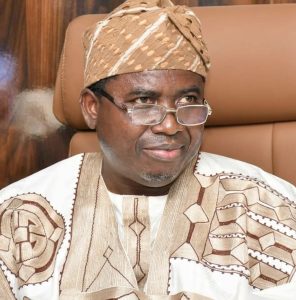
*By Richard Elesho, Bureau Chief, The News, North Central Zone
All eyes are on the Independent National Electoral Commission, INEC, to deliver free, fair, and credible general elections in 2027. Expectations are sky-high from Nigerians and the international community for the agency to usher Nigeria into a glorious era of electoral transparency and democratic consolidation. The expectations are not misplaced. The streak of improvements and excellent appraisals from the last two off-cycle guber elections in Anambra and Ekiti States formed its building block. Conducted between November 2025 and June 2026 under Prof. Joash Amupitan, SAN, who was appointed INEC boss in October 2025, those polls were adjudged free, fair, and credible by critical stakeholders, including both local and international election monitors.
In spite of the silver lining, some incurable cynical analysts would rather pass the positive development as a flash in the pan. However, the apparent progression and deepening of the democratic culture by those elections, coupled with the partnerships INEC, is forging with some public agencies and advanced democracies, are difficult to ignore. In fact, they have accentuated both public interest and enthusiasm that the upcoming elections would not fall below the set standard
The President Bola Ahmed Tinubu government has demonstrated commitment to credible polls with the timeous disbursement of the first tranche of N500 billion appropriation to INEC to enable it to commence early preparations for the smooth conduct of the elections. The funds, which were released in early July, will also ensure properly coordinated polling activities, as well as enable effective logistic and security arrangements to be emplaced. This leaves a balance of N500 billion yet to be released to the umpire out of the N1 trillion allocated to it in the 2026 budget .
The release of the funds is in compliance with the Electoral Act, which stipulates that funds must be released to INEC six months before a general election. Both local and international election stakeholders and development partners have applauded the move as a step in the right direction.
There is no gaying saying the fact that the assignment ahead is huge and highly demanding of prudence on the part of INEC. As the January/February polls approach, there is a comprehensive checklist of activities that must be done to ensure its success.
The foundation of electoral integrity and credibility is the availability of correct and up-to-date voters’ registers that guarantee voting rights for all eligible Nigerians. The voting age in the country is 18 years and above. INEC has therefore commenced the Continuous Voter Registration, CVR, exercise across the country to enable everyone within the age bracket to participate. It is also a period to update voters’ records, replace lost voter cards, and transfer voters to new polling units or states upon request, among others.
INEC has adopted flexibility and an elastic template for the registration exercise, shifting the closing deadline to August this year to accommodate as many as are willing to register. This is a major shift from the past when registration ceased eight months before the elections, thereby disenfranchising many people, especially new arrivals, into the voting age. Even then, the current arrangement must be inclusive, with particular reference to special citizens such as the aged, pregnant, or nursing women and people with physical barriers.
Another major item on the INEC’S checklist is the procurement of sufficient electoral machines and appropriate technology. The Bimodal Voters Accreditation Systems, BVAS, devices need to be procured on time for configuration and testing to identify the flaws and how to address them. The spare parts are also needed to prevent system failure during the elections. Officials who are to use these machines also need to be trained.
INEC appears to be on top of its game in this respect as over 95 per cent of the BVAS machines used in the Anambra and Ekiti off cycle guber polls worked efficiently. The election officials showed mastery of the machines as complaints about their performance were minimal, if not non-existent, during the two polls.
Similarly, election logistics forms a major aspect of the general elections that require early preparations. INEC must procure and distribute sensitive and non-sensitive election materials such as ballot papers, result sheets, ballot boxes, voting cubicles, indelible ink, and other supplies. It must also arrange transportation, storage, and timely deployment of materials and personnel to over 170,000 polling units, some of which are in hard to reach locations nationwide.
Security is key to the success of any elections. INEC must develop a comprehensive security template alongside the relevant security agencies to safeguard election officials, voters, polling units, materials, and collation centres. Security arrangements are crucial for preventing violence, intimidation, ballot box snatching, and other electoral offences. Luckily, security was scored high in the recent elections. The challenge is for the electoral umpire to synergise with sister agencies to replicate the off-cycle experience nationally.
Another critical subject that demands eagle-eye attention is the recruitment and training of election personnel. Thousands of ad hoc staff, including presiding officers and polling assistants, must be recruited and trained on electoral procedures, the use of BVAS, result management, and the Electoral Act.
Educating and mobilizing voters to come out and vote is another major task for INEC as the elections draw near. Voter education and public awareness campaigns need to be carried out nationwide to inform citizens about registration, PVC collection, accreditation procedures, voting processes, and electoral rules. This helps to reduce aparthy, invalid votes and encourages greater participation.
This time around, the technology for result transmission must be accorded high priority. The electronic systems, including the INEC Result Viewing (IReV) portal and other digital infrastructure to support accreditation, result transmission, need to be enplaced and put in good shape . That will guarantee peaceful elections and transparent result transmission.
Together, these activities form INEC’s operational roadmap for the 2027 general elections, ensuring that every stage—from voter registration to the declaration of results—is conducted efficiently, transparently, and in accordance with the Electoral Act and the Constitution.
It is instructive that in pursuit of credible general elections, INEC has begun the process of establishing strategic partnerships with various agencies of government and the British government. These novel initiatives are personally spearheaded by Prof. Amupitan. There is no doubt that they will strengthen the electoral process and build trust by preventing multiple voting and other associated vices.
Among such initiatives is the arrangement for a partnership deal with the National Identity Management Commission (NIMC) to use the National Identification Number (NIN) for voter verification, eliminate duplicate registrations, and strengthen electoral integrity. This effort is a vovelty and sharp departure from the past when a single individual could possess and deploy many voters’ cards in the same election.
Also praiseworthy is the partnership between INEC, Office of the Attorney General of the Federation, the National Salaries, Incomes and Wages Commission (NSIWC), and the Revenue Mobilisation Allocation and Fiscal Commission (RMAFC) to legally restructure and upgrade the salary scale for the commission’s board and personnel. Prof. Amupitan disclosed that the partnership became necessary as INEC had suffered a significant exodus of its key and experienced personnel due to inadequate remuneration. The proposed salary upgrades aim to provide competitive remuneration, boost workforce morale, and insulate staff against financial vulnerabilities that could threaten electoral integrity.
Another significant deal brokered by INEC is the partnership and stronger collaboration with the British government. The partnership centres on mitigating physical security threats surrounding polling environments.The UK will offer technical cooperation to defend INEC’s portal platforms against cyber threats, data breaches, and digital manipulation
As the general elections approach and preparations are in full swing, the Federal Government must quickly release the election budget’s outstanding balance of N500 billion to enable INEC settle its indebtedness to vendors, consultants, and contractors working for it to ensure targets are met and jobs done efficiently. The recruitment of ad hoc staff, training, logistics, security, voter education and public awareness campaigns, and procurement of relevant electronic devices and technologies depend heavily on the budget balance.
The partnerships with the National Identity Management Commission; National Salaries, Wages and Incomes Commission; Revenue Mobilisation, Allocation, and Fiscal Commission; and the British Government should be concluded and on time to strengthen our electoral integrity and infuse trust and credibility to the polls. That is when Amupitan’s assurance to his kinsmen through the leadership of the Okun Development Association, ODA, that elections will count under his watch will have national significance.