
 By joshua
 So Far So Good: Prof. Gbenga Ibileye’s Early Steps At FUL Signals A Better Future For Federal University Lokoja
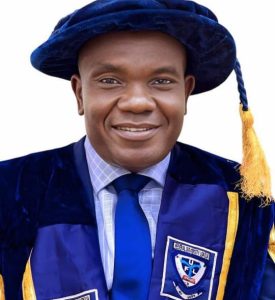
By Abu Micheal .
When Prof. Gbenga Solomon Ibileye assumed office on February 16, 2026 as the 4th Vice Chancellor and 2nd indigenous Vice Chancellor of Federal University Lokoja, expectations were high. He is a homegrown scholar who rose through the ranks of the institution from Head of English Department in 2012 to Provost of the College of Postgraduate Studies. The Governing Council’s choice was decisive, he emerged top with 91.9 points in a transparent, merit-based contest involving 11 professors.
A hundred days later, the early signs point in one direction, consolidation, innovation, and a people-centric administration that is already reshaping FUL’s academic and institutional outlook.
From day one, Prof. Ibileye set the tone with a clear vision. At his inauguration, he pledged “to transform the institution into a world-class institution distinguished by academic excellence, cutting-edge research, innovation and societal impact, while nurturing globally competitive students and staff in an enabling environment defined by transparency, inclusiveness, and collaboration”.
He broke the vision into a mission, “to enhance academic quality and strengthen research capacity; expand infrastructural development and digital transformation; promote global partnerships, innovation, and entrepreneurship; foster inclusiveness, staff development, and student welfare; and deepen community engagement and sustainable development initiatives”.
On academic identity, he was emphatic, “Academic excellence will remain our core identity. Accreditation standards will be strengthened. Market-relevant programmes in emerging fields will be introduced thoughtfully”.
He added, “My goal is to strengthen this University as a system, one that functions through clear processes, shared responsibility, and institutional discipline. A strong university works because its structures are sound, not because individuals are present”.
Prof. Ibileye has described his first 100 days not as a celebration but as “a checkpoint”. Yet the checkpoint is already showing results. The administration secured a N3 billion TETFund intervention for a Centre of Excellence in Artificial Intelligence, Robotics and Cyber Sciences, positioning FUL “at the frontier of the technologies reshaping the global economy”.
Other gains include TETFund annual intervention, a N335 million NEEDS Assessment grant, N700 million and N400 million special grants for laboratories and classrooms, and a N300 million zonal intervention. A N3 billion Public-Private Partnership for a model hotel has also been advanced for long-term financial sustainability. On academic quality, the NUC granted full accreditation to eight programmes, Mass Communication, Computer Science, Education Mathematics, Integrated Science, Biochemistry, Biotechnology, Microbiology, and Sociology.
Reacting, Prof. Ibileye said the outcome “reflects the University’s sustained investment in quality teaching, research, and infrastructure” and reaffirmed “the administration’s resolve to maintain high standards and further strengthen all academic programmes in line with global best practices”. He has since inaugurated a Central Accreditation Committee to make accreditation a continuous process, not a one-off event.
To deepen student engagement, the VC launched a “Vice Chancellor for a Day” programme to confer symbolic leadership on a deserving student as a celebration of academic excellence. He also prioritised welfare, announcing a N50 million staff vehicle refurbishment loan scheme, renovation of lavatories and boreholes, procurement of 200 classroom furniture sets, and distribution of 100 computers to staff.
For the University International College, he pledged a strategic facelift and salary review to make it “a benchmark for quality”. FUL also secured entry into the EU’s Erasmus+ Programme and advanced partnerships with Badr University, Cairo University, University of Pretoria, University of Manitoba, and Walter Sisulu University. The pioneer cohort of the College of Health Sciences has moved to Basic Clinical Training, putting them on track to become “the first generation of medical doctors trained entirely within Kogi”.
The Pro-Chancellor and Governing Council Chairman, Prof. Zubairu Abdallah, described the outgoing VC, Prof. Olayemi Akinwumi, as the “Father of Modern FUL,” and expressed confidence that Prof. Ibileye would consolidate those gains. The AREWA Forum in FUL pledged “cooperation, loyalty, and commitment to the progress of the institution” during a courtesy visit. Responding, the VC said, “All I see is human beings who populate this space. I do not see culture, tribe, or religion. We must continue to work together as people chosen for a generational transformation project”.
Prof. Ibileye has repeatedly stressed collaboration over individualism, “No Vice-Chancellor succeeds alone. No administration prospers without cooperation”. He has chosen “consolidation over spectacle and discipline over display”.
With full accreditation secured, major TETFund wins, student-focused programmes, staff welfare reforms, and a clear roadmap toward a world-class citadel of learning, Prof. Ibileye’s early steps are already validating the Council’s decision. For FUL, the message is consistent, the foundation is being strengthened, and the signals point to a better future.