
 By joshua
 THE DISHONESTY OF BLAMING ASO ROCK FOR EVERY PROBLEM IN NIGERIA
By Musa Bakare
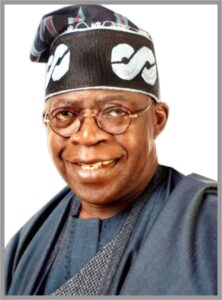
One of the greatest political deceptions ever sold to Nigerians is the dangerous and dishonest narrative that every problem in Nigeria originates from Aso Rock and that President Bola Ahmed Tinubu must bear the burden of every failure across the federation.
Nothing could be further from the truth.
Today, when kidnappers strike, bandits attack communities, roads collapse, hospitals become death traps, schools decay, and criminality flourishes, the first reaction of many Nigerians is to point accusing fingers at the President. Yet the same people remain strangely silent about the governors and local government chairmen who control enormous public resources specifically meant to address these challenges.
This selective outrage is not only hypocritical; it has become one of the biggest enablers of bad governance in Nigeria.
For over two decades, governors of the 36 states have received billions upon billions of naira in security votes, federal allocations and internally generated funds. These funds were not created for luxury convoys, political patronage, or endless media propaganda.
They were meant to strengthen local security architecture, build intelligence networks, support law enforcement, establish surveillance systems, and prevent criminal activities from growing into national emergencies.
The question Nigerians must ask is simple: What have the governors done with the huge monthly federal allocations released from 2023 to date by the Federal Government? What has been happening with the equally substantial internally generated revenue at their disposal?
Since 1999, trillions of naira have flowed into state government and local government coffers. Yet many states cannot boast of functional CCTV systems, integrated intelligence networks, modern communication infrastructure, emergency response centres, effective local security mechanisms, good roads, adequate water supply, functional health systems, and so on.
How then can every security, social, and structural failure in the country solely become the fault of President Tinubu?
Boko Haram was not created in Aso Rock. Banditry did not begin in Aso Rock. Kidnapping syndicates were not established in Aso Rock. Farmer-herder conflicts did not originate in Aso Rock.
Criminal networks thrive where local intelligence fails, where preventive measures are absent, and where leadership is reactive instead of proactive. These are areas where governors have direct influence, enormous resources, and constitutional responsibilities.
The same governors who proudly parade themselves as “Chief Security Officers” during election campaigns and traverse their states in very long convoys of exotic cars suddenly become helpless spectators whenever insecurity and other failures escalate.
The double standard is astounding.
The roads most Nigerians use daily are state roads. Primary and secondary schools are largely state responsibilities. Most public hospitals belong to state governments. Agricultural extension programmes are managed by states. Rural development is driven primarily by state governments. Local infrastructure falls under state jurisdiction.
Yet when these sectors collapse, many Nigerians immediately launch attacks on the Federal Government, while those states and local governments directly responsible escape scrutiny.
This culture of misplaced blame must end.
The truth many politicians do not want Nigerians to hear is that Nigeria’s crisis is not merely a federal problem; it is equally a crisis of incompetent and unaccountable state and local government governance.
Some governors operate budgets larger than those of several African countries. They receive federal allocations, internally generated revenue, intervention funds, ecological funds, derivation funds, and security votes. Yet millions of their citizens remain trapped in poverty, insecurity, and underdevelopment.
Where did the money go? How many governors publish detailed accounts of how their huge annual budgets, as well as their security expenditures, are spent?
How many state assemblies independently audit federal allocations and security votes?
How many governors release measurable performance reports on security and infrastructure?
How many citizens demand answers?
The silence is deafening.
That silence has created a dangerous political environment where governors wield enormous power, spend vast public resources, and yet face little accountability.
Citizens have every right to question every federal, state, and local government policy. That is democracy.
But it is intellectually dishonest and politically lazy to blame Tinubu for every kidnapping in a village, every failed state road, every collapsed state hospital, every dysfunctional school, and every governance failure occurring across 36 states and 774 local governments.
A governor receiving billions of naira every month cannot continue hiding behind Abuja. The era of excuses must come to an end.
Nigerians must begin demanding answers where answers are due.
Until Nigerians direct the same energy they use to criticize the President towards scrutinising state governors and local government chairmen, the country will remain trapped in a cycle of misplaced anger and protected incompetence.
The future of accountability begins with a simple truth: a governor who controls billions but delivers little is just as responsible for the suffering of his people as any leader in Abuja.
Governors are not spectators. They are not victims. They are not helpless observers. They are principal actors in the Nigerian governance structure and must answer for their failures.
Enough of the excuses. Enough of the blame game. Enough of turning President Tinubu into a convenient scapegoat for the incompetence, negligence, waste, and failures of state governors who have enjoyed enormous resources with little accountability.
Nigeria deserves better. Accountability must begin in every Government House across the 36 states, every State Assembly, and every Local Government Secretariat across the federation. Only then can Nigerians truly identify those responsible for their suffering and those genuinely working for their progress.
Musa Asiru Bakare
Founding Member, APC | Political Analyst
Writes from Lokoja, Kogi State
June 5, 2026