
 By joshua
 SEMA Stakeholders Meeting: NEMA Lists 10 Kogi LGAs as High Flood-Risk Areas Ahead of 2026 Rainy Season

The National Emergency Management Agency has warned that 10 local government areas in Kogi State face a high risk of flooding in 2026 and has urged residents, communities, and stakeholders to take early measures to protect lives and property.

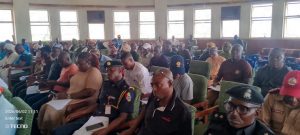
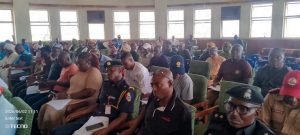
The warning was issued in Lokoja during a stakeholders’ engagement and the flag-off of the 2026 National Preparedness and Response Campaign on Flood and Related Hazards organized by the Kogi State Emergency Management Agency.

The Director-General of NEMA, Mrs. Zubaida Umar, said the campaign is designed to promote early and coordinated action ahead of the rainy season. She noted that this year’s theme, “Strengthening Disaster Risk Governance for a Resilient Nigeria,” highlights the need for stronger institutions, clearer responsibilities, and closer collaboration among stakeholders at all levels.
Represented by Dr. Adebiyi Babatunde Rasaq, Acting Director, North Central Zone, Mrs. Umar said flooding remains a major challenge nationwide, often leading to loss of lives, displacement of communities, damage to livelihoods, and destruction of public and private infrastructure. She disclosed that forecasts from the Nigerian Meteorological Agency and the Nigeria Hydrological Services Agency identified 23 states and the Federal Capital Territory, covering 132 local government areas, as high flood-risk zones for 2026, while 14 states covering 148 local government areas fall under moderate risk.
In Kogi State, the LGAs listed as high-risk include Ajaokuta, Omala, Lokoja, Ofu, Bassa, Ibaji, Idah, Koton-Karfe, Adavi, and others. Mrs. Umar explained that an expert review in March assessed climate forecasts and identified possible challenges such as delayed rainfall, shorter growing seasons, prolonged dry spells, above-normal rainfall in some areas, and rising temperatures. She said these conditions could affect agriculture, healthcare, transportation, energy, water resources, education, and general wellbeing.
To reduce potential impact, NEMA has developed a 2026 climate-related risk management and preparedness framework. The plan includes training for local responders, simulation exercises, compliance with flood advisories, prepositioning of relief materials in vulnerable areas, assessment of infrastructure, and preparation of community evacuation plans. Vulnerability maps have also been produced to support targeted planning by federal, state, and local governments.
The Director-General added that NEMA has begun deploying technical teams to states for community engagement and sensitization, with support from State Emergency Management Agencies, Local Emergency Management Committees, and community volunteers. She called on traditional rulers, religious bodies, women and youth groups, the media, private sector operators, and development partners to help amplify early warning messages.
“Preventing avoidable flood disasters requires a whole-of-society approach. Disaster management is everyone’s responsibility,” she said. Mrs. Umar expressed optimism that the engagement would strengthen preparedness and reduce the impact of recurrent floods in line with the Federal Government’s Renewed Hope Agenda.
The Executive Secretary of KOSEMA, Mouktar Atimah, said the stakeholders’ meeting is part of the agency’s strategy to mitigate flooding in the state. He noted that early planning, inter-agency collaboration, and effective response will help minimize losses and save lives. He added that the engagement provides a platform for sharing knowledge, best practices, and identifying gaps in order to strengthen the capacity of local emergency management committees.