
 By joshua
 A PETER MBAH MODEL FOR NATIONAL SECURITY
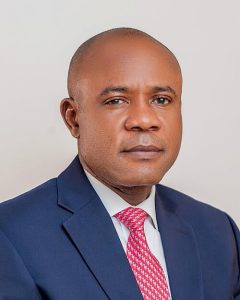
*By Tunde Olusunle*
Typical of the reactive style of our defence and security agencies, Nigeria’s Chief of Defence Staff, General Olufemi Oluyede, Tuesday May 26, 2026, ordered the deployment of special forces and advanced surveillance assets to Oyo State. The Director of Defence Media Operations, Major-General Michael Onoja disclosed this during an engagement with the press, exactly one week after armed men abducted 39 students and seven teachers from schools in Ori-Ire local government area in the state. The bloodhounds would eventually behead one of the teachers, Michael Olugbade Oyedokun, to reinforce their mean-spiritedness. Such terrorism, such bloodletting has, very sadly, become normalised in contemporary Nigeria. *Statisense* estimates that 35,432 lives have been lost in the first three years of the administration of President Bola Tinubu. This works out at an average of 35 deaths per day.
Sunday May 31, 2026, the Chief of Staff to the President, Femi Gbajabiamila, led a federal government delegation to the aggrieved communities and the families. Optics are critical to perception in communication and politics. That Gbajabiamila and National Security Adviser, (NSA), Nuhu Ribadu chose to appear in billowing *agbada* in the rural Esiele and Yawota communities where the victims were forcefully taken from weeks before, was totally at variance with the sombreness of the occasion. They were received by Abdulfatai Omotayo Buhari, Senator representing Oyo North Senatorial District, who has barely had a good night’s sleep since the unfortunate incident. He was dressed in simple *ankara* fabric, like the generality of his constituents. The federal government team should have seen the Oyo State Governor, Seyi Makinde who had earlier visited to share in the anguish and trauma of his people, who turned up in a tee-shirt and jeans trousers.
In consonance with the *ase han* style, the loud exhibitionism which has characterised and compromised the administration’s knee-jerk approach to security management, Gbajabiamila, Ribadu and company were loud on government’s plans to rescue the victims and subsequently boost security in rural areas. Thrice in the past few months, December 2025 and May 2026, the United States of America, (USA), has collaborated with Nigerian intelligence and defence in hitting terrorist strongholds in Nigeria. On all occasions, Nigerians get to hear about the planning and implementation, until after the deed had been done, usually via tweets by the US President and Commander-in-Chief, Donald Trump. But Tinubu’s emissaries, just like the CDS who publicised the deployment of drone assets and special forces, have put terrorists on notice now that they will be chased about henceforth by 1000 forest guards in Oyo State, and should expect a military base in the Oke-Ogun district soon, to combat their trade.
In a recent postmortem on the President’s visit to Jos, the Plateau State capital after the Rukuba killings earlier in the year, I alluded to his proclivity for impulsive pronouncements, which lack requisite thinking through. The President had directed relevant government departments to ensure the total coverage of Jos and its environs with “AI-powered security surveillance gadgets.” In that piece which I titled *Still On Tinubu’s Whistle-stop In Jos,* I observed that whereas the President’s spontaneous pronouncement in the course of that Jos visit was borne of a desire for a sustainable prescription to mitigate security breaches in the city, a more rigorous, more pan-Nigerian surveillance coverage is urgent and imperative. Every other part of Nigeria suffers some kind of security encroachment or the other.
It was Ori-Ire, Oyo State two weeks ago; Yashikara in Baruten local government area of Kwara State where the Emir’s palace was burnt by marauders and 10 people kidnapped exactly one week ago. Saturday May 30, 2026, former Director of Defence Information, retired Major-General Rabe Abubakar and his wife were abducted by bandits in Matazu local government area, Katsina State. It was the turn of the sleepy Aiyegunle-Bunu community Ijumu council area, Kogi State, just last night where two people were killed in their homes and 30 others marched into the forests. What Nigeria is facing at the moment is a rampaging national insecurity epidemic inimical to its overall wellbeing. Less than two weeks ago, the National Drug Law Enforcement Agency, (NDLEA), uncovered Nigeria’s largest clandestine methamphetamine plant, buried in the bowels of the Abidagba forest in Ijebu East council area of Ogun State. The Nigerian-led cartel included three Mexican technical experts and methamphetamine and precursor chemicals valued at nearly N500 Billion were seized. One week after, a Fulani cell tucked away in Omugbawojo in Ijebu North East and home to an estimated 2000 undocumented herdsmen, was also uncovered. Nigeria’s security emergency is real and dreadful to say the least.
Closely related to this is that vandalism of public infrastructure has become a palpable national security threat. A video clip trended through the weekend of the metal expansion joints on the freshly built Second Niger Bridge in Onitsha, Anambra State, removed and exposing dangerous spiky, studs and putting drivers and commuters at mortal risk. Also trending is a video clip of a whole solar street lamp, complete with its metal pole, uprooted and hoisted on the shoulder by a street urchin, ostensibly for disposal for pittance, in a scrap market. The skeletal remains of the Katsina-Maradi rail line, one of the star projects of the Muhammadu Buhari administration, has also featured prominently on the social media in recent days, compounding confoundment about the scope and gravity of our security issues. The metal meshes being installed by Nyesom Wike, Minister of the Federal Capital Territory, (FCT), to protect green areas are being simultaneously mutilated and stolen by miscreants in broad daylight. The DNA of a certain specie of Nigerians seems totally antithetical to growth and development.
May 11, 2026, President Tinubu appointed Adeyinka Famadewa, a retired Major-General, as Special Adviser on Homeland Security. It is a novel creation in Nigeria’s security and governance system, which is expected to strengthen internal security coordination, improve intelligence integration and deepen inter-agency collaboration across the country’s security architecture. This additional bureaucracy may not be unconnected with the failure of existing structures and their operators to tame the spawning ogre of national insecurity. Whereas his appointment as Minister of Defence last year was expected to have an immediate bearing on reining in insecurity, General Christopher Musa has been more famous for rhetoric than tangibles. He recently drew loud public criticism when he scored the Tinubu government 70 percent in security management in his assessment of its three-year sojourn, a proposition which borders on misrepresentation in the face of empirical reality.
Every senior public officer entrusted with a role in the nation’s security ecosystem, must begin his orientation and settling in process by touring and studying the digitally-driven security architecture emplaced by Governor Peter Ndubuisi Mbah of Enugu State, as a guide. Let’s be clear: Mbah was not cajoled, procured or installed by any interest or godfather to function as a clone, proxy or placeholder. Courtesy of his tours of duty in government in various positions, including serving as local government Chairman, Chief of Staff and Commissioner, at various times, Mbah dreamed of an opportunity to add value to governance and to his people if providence gave him an opportunity, someday. He built himself, first into a redoubtable entrepreneur, while at the same time articulating a policy blueprint to impact his state when an opportunity beckons. Security, economy and infrastructure topped Mbah’s policy document especially because of their connectedness.
Within his first two years in office, Mbah had established a state-of-the-art security and surveillance hub, in Government House, Enugu, the envy of many small African countries. It deploys an integrated network of AI-powered CCTV cameras across the state, to monitor security infractions in real-time and coordinate rapid responses. The coverage of the equipment which includes high-powered drones, indeed oversights neighbouring states to facilitate information sharing in crime prevention. Mbah’s decision to domicile the digitised complex in Government House, enables him to play the role of a hands-on Chief Security Officer of his state, (CSO), who can walk down from his office, if need be, to avail himself of goings-on in his state, relative to the welfare of his constituents and commuters through the boundaries of his state. The centre, which is integrated with the monitoring systems of various security services operating in the state, can be accessed by dedicated emergency hotlines.
In turn, the emergency lines call up the Distress Response Squad, (DRS), a very well kitted, multi-service squad which is served by a standby pool of at least 150 serviceable patrol vehicles, if and when the need arises. While the wholesale elimination of crime is impossible anywhere in the world, Governor Mbah has ensured by his uncommon vision and willpower, that Enugu State does not feature at the top of terrorised states in the country. The state capital, known by the legend *Coal City* because of its historical place in coal mining in Nigeria’s primordial socioeconomy, is rapidly regaining its place as the preferred destination in Nigeria’s South East. It is indeed positioning itself as conference counterpoint to Lagos and Abuja. All because security reigns, because sanity rules, thanks to Mbah’s proactive inventiveness. Instructively, Mbah was last December appointed by the National Economic Council, (NEC), to chair a committee tasked with overhauling training institutions for security agencies across the country. The committee was handed the sum of N100 Billion by the federal government in December as part of efforts to transform the nation’s security sector, especially in the areas of infrastructure and training. To imagine Mbah has no previous training or professional experience in defence and security. He’s an attorney and a focused, deep-thinking visionary.
The subsisting haphazard, higgledy-piggledy approach to insecurity in Nigeria, must change. Else we lose this country in its entirety, it totality. Immigrant Nigerians in many countries are already being shown the “skin of the yam,” as we say in Yoruba, and being heckled to return to their countries, so we are condemned to fix this country. President Tinubu must remind state governors that they have a major role to play in mitigating insecurity. They must junket less, the way they presently do like overgrown schoolboys, ever craving photo opportunities with the President, at home and abroad. They need to sit more on their desks, be more responsive, more responsible and more accountable. Enough of their typical hands-in-the-air despair whenever terrorist thunder strikes. Individually and collectively, they are enjoined to xerox the Peter Mbah-style, AI-driven security superstructure, and take direct and conscientious charge of security in their domains, beyond the ornamental necklace of being the “Chief Security Officers” of their states. Advanced technology has provided for these disparate efforts to be linked to a national security dashboard where surveillance assets in round-the-clock functionality, are ever highlighting flash points needing realtime attention, across the country. With the United States and a number of other countries offering a hand of fellowship in Nigeria’s security quagmire, there’s no better time to leverage this opportunity to restore some stability into our undeniably beleaguered country.
*Tunde Olusunle, PhD, Fellow of the Association of Nigerian Authors, (FANA), teaches Creative Writing at the University of Abuja*