
 By joshua
 Kashim Shettima: The Quiet Strategist Behind Borno’s Political Stability and National Leadership
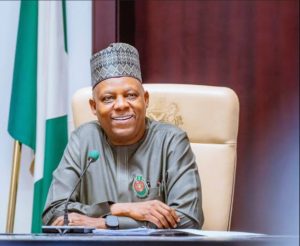
By Abdulkarim Abdulmalik
In the turbulent political history of Nigeria, very few leaders have managed to combine intellectual brilliance, political courage, administrative discipline, and uncommon humility in the manner of Nigeria’s Vice President, Kashim Shettima.
From the ashes of insurgency in Borno State to the demanding corridors of national power in Abuja, Shettima’s political journey remains one of the most remarkable stories in contemporary Nigerian leadership. His rise was never built on noise, propaganda, or flamboyant populism.
Rather, it was founded on strategic thinking, resilience under pressure, loyalty to institutions, and the rare ability to identify and nurture competent leadership.
Today, even many of his critics quietly acknowledge that Kashim Shettima represents a different brand of Nigerian politician — one whose political decisions continue to shape the destiny of Borno State and influence governance at the national level.
*Leadership Under Fire in Borno*
When Kashim Shettima became Governor of Borno State in 2011, few leaders in Nigeria inherited a more difficult situation.
The Boko Haram insurgency had begun to spread like wildfire across the North-East. Communities were under siege. Thousands were displaced. Fear gripped Maiduguri and many parts of Borno State. Government institutions were collapsing under the apparent crushing weight of insecurity.
Many believed Borno was on the verge of becoming an ungovernable territory.
However, Shettima confronted the crisis with unusual courage and emotional connection to the people. Unlike many leaders who govern from protected comfort zones, he was frequently seen visiting displaced persons camps, comforting grieving families, and engaging directly with victims of insurgency attacks.
He transformed schools destroyed by insurgents, invested heavily in reconstruction projects, revived healthcare infrastructure, and expanded humanitarian interventions across affected communities. At a time when despair threatened to define Borno, Shettima projected confidence and administrative stability.
His greatest strength during those difficult years might have been hinged on his ability to maintain governance even amid war-like conditions. Salaries continued to be paid. Public institutions remained functional. Reconstruction efforts continued despite repeated terrorist attacks.
His government also invested in education, recognizing that long-term peace could only emerge through knowledge, social inclusion, and economic opportunity.
For many residents of Borno, Shettima was not merely a governor. He became a symbol of endurance during one of the darkest periods in the state’s history.
*The Political Gamble Called Babagana Zulum*
One of Kashim Shettima’s most enduring achievements may not be a road, hospital, or school project. It was his decision to identify and support Professor Babagana Umara Zulum as his successor in 2019.
At the time, many political observers were surprised.
Zulum was not considered a traditional political heavyweight. He was largely known as an academic, technocrat, and administrator. In a political culture often dominated by money, godfatherism, and entrenched political structures, his emergence appeared unexpected and even improbable.
But Shettima saw something many politicians failed to see.
He recognized competence.
He understood that leadership succession should not merely protect political interests but sustain governance quality and public trust. Instead of imposing a loyal political puppet, Shettima chose a man known for discipline, integrity, hard work, and grassroots compassion.
History has since vindicated that decision.
Governor Babagana Zulum went on to become one of Nigeria’s most admired governors, earning national and international recognition for his hands-on leadership style, security interventions, educational reforms, and humanitarian outreach.
Many analysts now regard the Shettima-Zulum transition as one of the rare examples in Nigerian politics where succession planning genuinely prioritized governance continuity over political selfishness.
*Refusing the Temptation of Godfatherism*
In Nigerian politics, former governors often remain powerful political overlords who attempt to control their successors from behind the scenes. Many states across the federation have suffered destructive political conflicts fueled by godfatherism and ego battles.
But Kashim Shettima chose a different path.
After leaving office and becoming a Senator representing Borno Central, he avoided interfering in the day-to-day governance of the state. He allowed Zulum to exercise authority independently and build his own political identity.
That restraint demonstrated uncommon political maturity.
Rather than competing for relevance, Shettima appeared more interested in protecting institutional stability in Borno State. The absence of public conflict between both leaders strengthened governance and reassured citizens weary of political infighting.
In many ways, this political culture of mutual respect between Shettima and Zulum became a model rarely seen in Nigeria’s democratic environment.
It also reflected Shettima’s understanding that leadership is not about perpetual control but about building enduring systems and empowering capable successors.
*Resilience in the Presidency*
As Vice President under President Bola Ahmed Tinubu, Kashim Shettima has once again demonstrated remarkable resilience and adaptability.
The Tinubu administration inherited severe economic, political, and social challenges, including inflation, currency instability, subsidy removal controversies, and rising public dissatisfaction. The pressures on the presidency have been enormous.
Yet Shettima has consistently projected calmness, loyalty, and intellectual depth in defending government policies and engaging stakeholders.
His speeches often reveal a leader deeply grounded in history, economics, governance, and diplomacy. Unlike many politicians who rely heavily on emotional rhetoric, Shettima speaks with analytical precision and broad intellectual awareness.
Even political opponents frequently acknowledge his brilliance, eloquence, and mastery of policy discussions.
Within government circles, he is widely regarded as one of the most thorough-minded public officials in the current administration — a man known for detailed preparation, strategic communication, and administrative clarity.
His ability to remain steady amid political turbulence mirrors the same resilience he displayed during the Boko Haram crisis in Borno.
*The Power of Intellectual Politics*
One of the defining features of Kashim Shettima’s political career is his commitment to intellectualism in governance.
Before entering partisan politics, he built a distinguished career in banking and public administration. He is widely known as an avid reader, strategic thinker, and articulate public speaker.
In an era where political leadership is often reduced to slogans and propaganda, Shettima represents a school of politics rooted in preparation, substance, and administrative competence.
His success illustrates an important lesson for Nigeria’s younger generation: leadership excellence is rarely accidental. It is often the product of discipline, knowledge, courage, and the ability to make difficult decisions at critical moments.
The decision to support Zulum. The refusal to destabilize Borno politics after office. The steadiness under national pressure as Vice President. These are not isolated acts of chance. They reflect a political philosophy built around long-term thinking and institutional continuity.
*A Legacy Still Unfolding*
Kashim Shettima’s political story is still unfolding. Like every public figure, opinions about him will continue to vary across political and ideological lines. Thus, his critics may even find it difficult to ignore the enduring marks he has left on Borno State and his growing influence on Nigeria’s national leadership landscape.
In a country where political transitions often produce instability, Shettima helped to engineer continuity. In a political culture where many leaders cling to power indirectly, he demonstrated restraint. And in a season of national uncertainty, he continues to project composure and intellectual confidence.
Perhaps that is why many Nigerians increasingly view Kashim Shettima not merely as a politician, but as a strategist whose leadership style offers important lessons on governance, succession, and political maturity.
At a time when Nigeria desperately seeks competent and visionary leadership, Shettima’s journey serves as a reminder that true political success is not measured only by power attained, but by stability created, institutions strengthened, and capable leaders empowered.
– Abdulkarim Abdulmalik is an Abuja-based Journalist and Chairman Governing Board, Guild of Interfaith Media Practitioners Nigeria (&GIMP-Nigeria).