
 By joshua
 Maiyaki of Lokoja to Musicians: Keep Traditional Institution Out of Politics
By Musa Tanimu Nasidi
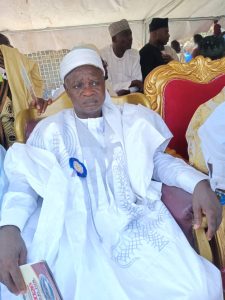
In a climate where music, culture and politics increasingly intersect, the Maiyaki of Lokoja, Alhaji Ali Lawal, has drawn a firm line—urging local musicians to refrain from dragging the Lokoja traditional institution into political affairs.
Speaking at a gathering held at the parade ground in Lokoja on Saturday, the senior member of the Lokoja Local Government Traditional Council expressed concern over what he described as a growing tendency among some entertainers to politicize cultural platforms and traditional symbols.
According to him, while citizens are free to hold and express political opinions, the palace must remain neutral, serving as a unifying force for all, regardless of political affiliation.
“Every citizen is entitled to his or her political opinions,” he said. “But the traditional institution is different. His Royal Highness is a father to all. In the palace, we do not engage in politics. This is not a campaign ground, and the ban on political campaigns has not yet been lifted.”
His remarks come amid heightened political awareness in the lead-up to future electoral activities, where public figures—including musicians—often play influential roles in shaping narratives and mobilizing support.
Observers say the caution is timely. In many communities, musicians are not just entertainers but opinion leaders whose songs and public statements can sway public sentiment. However, when such influence intersects with revered traditional institutions, it risks blurring the lines between cultural heritage and partisan politics.
Alhaji Lawal emphasized that the sanctity of the traditional council must be preserved, noting that the palace symbolizes unity, peace, and continuity of culture. Dragging it into political debates, he warned, could undermine its credibility and its role as a custodian of tradition.
Lokoja, known for its rich historical and cultural heritage, has long relied on its traditional leadership to mediate community issues and foster harmony among diverse groups. The Maiyaki reiterated that this responsibility should not be compromised.
Community stakeholders who spoke after the event echoed his sentiments, stressing the need for all actors—especially youth and creatives—to exercise restraint and respect institutional boundaries.
As political activities gradually build momentum across the country, the message from Lokoja’s traditional leadership is clear: culture and tradition must remain above partisan interests, serving as a bridge that unites rather than divides.